
Living in hope when you’re not an optimist
An optimist, my favorite definition goes, is someone who falls off a skyscraper and as he passes the thirtieth floor thinks: “So far, so good.”
The Bush presidency, the corporate take-over of the US, and the destruction of government social programs make it hard to be both a realist and an optimist. We can’t just look at the half of the glass that’s full and disregard the empty half.
In reality the glass is far from half full. It’s full only for the richest 10% or fewer of US citizens. Many of the other 90% — many who are deluded victims of this administration, — have been bamboozled into believing that the right-wing social agenda, including the prevention of marriage equality, is the real solution to their problems.
This inability to be optimistic doesn’t mean that pessimism is the only alternative. No matter how we feel about the future, there’s a better, empowering, and realistic choice that can change things. It’s hope.
Author-activist Paul Rogat Loeb documents that hope in The Impossible Will Take a Little While: A Citizen’s Guide to Hope in a Time of Fear (Basic Books, 2004). It’s a collection of voices that’s a must read today.
Loeb’s book would be worth it if only for his introductory essays. “Hope,” he reminds us, “is a way of looking at the world – more than that, it’s a way of life.”
Loeb has inspired progressives for decades, including his earlier Soul of a Citizen: Living with Conviction in a Cynical Time (St. Martin’s, 1999). But in his new volume he also brings together the voices of the many others who are models of hope in the midst of seemingly overwhelming odds.
The experience of Vaclav Havel, former Czechoslovakian president, is one example. Three years before the Communist dictatorship fell, Havel wrote, “Hope is not prognostication. It is an orientation of the spirit, an orientation of the heart.” His experience is only one of many that prove that a series of seemingly futile and insignificant actions can bring down an empire.
Even in what appears to be a losing cause, one person may knowingly inspire another and then another who could go on and change the world.
Loeb tells of a friend who in the early 1960s in a pouring rain joined a small vigil in front of the White House protesting nuclear testing. A few years later famous baby doctor Benjamin Spock, who influenced thousands, spoke at a much larger march against the Viet Nam War, telling the crowd that his inspiration was that small group of women he saw by chance huddled with their kids in the rain. “I thought that if those women were out there, their cause must be really important.”
In The Impossible Will Take a Little While we hear Nelson Mandela speak of how to survive prison intact, emerge undiminished, and conserve and replenish one’s hope. We hear Susan B. Anthony’s words that “cautious, careful people, always casting about to preserve their reputation and social standing, never can bring about a reform.”
We hear Native American writer Sherman Alexie’s hope: “Everything is stuffed to the brim with ideas and love and hope and magic and dreams.” We hear gay, Tony-award-winning playwright Tony Kushner write that despair is a lie we tell ourselves, reminding us of the words of Martin Luther King, Jr. that “the arc of the moral universe is long but it bends toward justice.” Then there’s Cornell West saying: “To live is to wrestle with despair yet never to allow despair to have the last word.”
In other essays we read of the creativity of people who carried on against great odds and were there to see the powers fall. They often never thought they were activists. They merely tried to end what was hurting them or their families.
We hear of others who fought for progressive values even though they didn’t expect to see results in their lifetime. But these were activists, Loeb reminds us, who believed that, “living with conviction is of value in itself regardless of the outcome.”
Giving up on life and the living, Loeb argues, is really ‘a form of arrogance.” Alice Walker’s testimony “Only Justice Can Stop a Curse,” examines the arrogance of the politics of bitterness.
So, for our own lives, for our own good, for our own conscience and integrity, we seem to have no choice other than acting out of hope.
“Life is a gamble,” historian Howard Zinn writes. “Not to play is to foreclose any chance of winning. To play, to act, is to create at least a possibility of changing the world.”
Settling for personal change isn’t enough to make our lives worth living and to ensure the world we want. Giving up in cynicism and pessimism will eat us up from the inside and allow those who’d hurt us to destroy the outside. We’ve been made for more.
Loeb: “We can’t afford the sentimental view that mere self-improvement, no matter how noble in intention, is enough. Nor can we afford to succumb to fear.”
It’s hard to do justice to a collection like The Impossible Will Take a Little While. Snippets of these inspiring writings make them seem trite and precious.
But when you sit down to read these short essays, the effect is cumulative, hope-inspiring. These words never deviate from the realities of facing the often cruel societies others have made because these represent the stories of real people. And they inspire those of us who feel we have only a small garden to hoe, not an empire to redirect.
But I can’t resist the hope in words such as these from Benjamin Mays, mentor to Dr. King: “The tragedy of life doesn’t lie in not reaching a goal. The tragedy lies in having no goal to reach. It isn’t a calamity to die with dreams unfilled, but it is a calamity not to dream. It is not a disgrace not to reach the stars, but it is a disgrace to have no stars to reach for.”
Hope is realistic, and it’s a choice.
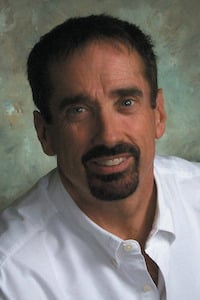
Professor Emeritus of Religious Studies at the University of Kansas where he taught for 33 years and was department chair for six years, Robert N. Minor (he/him), M.A., Ph.D is the author of 8 books as well as numerous articles and contributions to edited volumes. He is an historian of religions with specialties in Biblical studies, Asian religions, religion and gender, and religion and sexuality. His writing has been published in Whosoever since 2005 and he continues to speak and lead workshops around the country. In 1999 GLAAD awarded him its Leadership Award for Education, in 2012 the University of Kansas named him one of the University’s Men of Merit, in 2015 the American Men’s Studies Association gave him the Lifetime Membership Award, and in 2018 Missouri Jobs with Justice presented him with the Worker’s Rights Board Leadership Award. He resides in Kansas City and is founder of The Fairness Project.