
You’ve heard the question in a number of forms: Why are gay people the way they are?
I’m not talking about the complaints of critical right-wingers. They refuse to accept a rational answer, and don’t want one.
I’m talking about the generalizations we make about each other that usually tell us more about our own frustrations than about the people from whom we had apparently expected more.
Why are gay men so fickle?
Why are lesbians all out to steal other women’s partners?
Why are young gay people only interested in partying and drugs? Why can’t we get them interested in politics?
Why are older gay men so predatory about younger gay men?
Why do gay people seem to get their manners from bars?
Why do gay men and lesbians fight?
Why are bi and trans people marginalized in the gay community?
Why are lesbians so angry?
Why are gay men so bitter?
Why is there so much emphasis on looks?
Why would any self-accepting LGBT person be a Republican?
Why do rich gay people deny the struggles of the rest of us?
Why do gay people stay in organizations that don’t accept them?
Why do gay people use leadership positions to get their strokes? And why do they fight so much over leadership?
Why do they seem to expect the worst of each other?
Why do they seem to revel in sordid details of the lives of anyone who tries to lead the community?
I’ve been speaking and writing for years about how LGBT people react, relate, and absorb the sick messages of society and apply them to themselves almost unconsciously. Gay and Healthy in A Sick Society (HumanityWorks!, 2003) offered some conclusions.
Even though I don’t buy into the generalizations, there are common patterns behind them that provide the anecdotes for the people who make them.
Now, all the major psychological and counseling organizations over thirty years ago concluded that none of this has anything to do with same-sex attraction. So, it’s settled. There is nothing “wrong” with anyone that has to do with their sexual orientation.
If we could just get that idea down, believe it, and use it, we’d make a lot of progress in our community. But I’ve often seen people who deny that they have any problems with their sexual orientation still speak, act, and relate in ways that make one wonder if they’re really so healthy.
After all, there’s an important social dynamic at work here – people from a group that has been oppressed by the larger society internalize that oppression in a way that divides them in, from, and among themselves. Brazilian educator Paolo Freire (Pedagogy of the Oppressed, 1973) identified it as a fear of being free from the constricting, negative images of the very system that oppresses them.
“The oppressed,” he writes, “having internalized the image of the oppressor and adopted his [sic] guidelines, are fearful of freedom. Freedom would require them to eject this image and replace it with autonomy and responsibility. Freedom… must be pursued constantly and responsibly.”
In a very straight-dominant society, LGBT people internalize not only the negative images of them society installs in everyone even before some know they’re not straight. They have also absorbed the very negativity of these images.
We’re not, then, automatically free from the judgments of the oppressor. The internalized negativity appears in the negative over-generalizations made about other LGBT people, the ease by which we look for the worst or at least the flaws in them, and a resulting inability to “play well with others” in our own groups.
Leaders fight. Organizations compete. Negative, unconfirmed gossip and rumors become juicy conversation. Criticism abounds. Bitterness develops. Relationships become drama.
Instead of living in a self-defined, individual freedom, this results in protective personal strategies to keep from being hurt, let down, or rejected by the very group we had thought would accept us. Somehow we even feel like outsiders among other LGBT people.
Then we assume the worst from the beginning and don’t put faith in others so that our hope won’t be dashed. We feel that if we can just huddle together with one person who really loves us, we won’t feel the negativity. That person will save us.
We can also protect ourselves if we live a life of denial walled in with the emotional protection of alcohol, drugs, partying, membership in an elite LGBT in-group, unfulfilling sexual encounters, superficial conversations, closeted or semi-closeted relationships with straight people, or the many, often good, things we do in order to fill a hole within us with somebody’s love and attention.
Nothing in this is essentially gay. It’s the typical, predictable activities of any group of people who have a history of being been hurt by society and haven’t pursued their own healing journey.
It’s difficult to get the members of victimized groups to stop living out their unhealed hurts on each other and take on the larger system that’s been hurting them. But it begins with each individual who embraces their own healing.
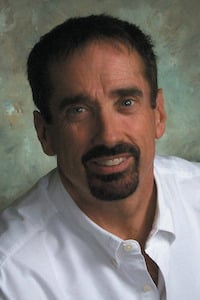
Professor Emeritus of Religious Studies at the University of Kansas where he taught for 33 years and was department chair for six years, Robert N. Minor (he/him), M.A., Ph.D is the author of 8 books as well as numerous articles and contributions to edited volumes. He is an historian of religions with specialties in Biblical studies, Asian religions, religion and gender, and religion and sexuality. His writing has been published in Whosoever since 2005 and he continues to speak and lead workshops around the country. In 1999 GLAAD awarded him its Leadership Award for Education, in 2012 the University of Kansas named him one of the University’s Men of Merit, in 2015 the American Men’s Studies Association gave him the Lifetime Membership Award, and in 2018 Missouri Jobs with Justice presented him with the Worker’s Rights Board Leadership Award. He resides in Kansas City and is founder of The Fairness Project.