
Several months ago during a casual conversation, I was described by someone as being a radical. When he first said it I didn’t know whether I should laugh or be offended.
It never quite dawned on me until then that my standing up against spiritual homophobia, writing a gay spiritual book and producing and hosting a national black gay TV talk show would qualify me for radical status, but apparently in the minds of some it has.
Prior to this particular conversation, my mental concept of radicalism or the word radical represented outdated images of white women burning their bras in protest of anything male dominated or people chaining themselves to century old oak trees.
So now I asked myself, what exactly is a radical? Is it someone who marches down the street shouting, screaming, and decrying the injustices of the day? Or is it someone who commits outrageous acts of protest capturing his/her three minutes of fame on the evening news?
And how exactly does a radical mind think? Does it wake up every morning determined to rock the boat of society? Or does a radical mind intentionally try to kick in the front teeth of the status quo just for kicks?
In reality I believe that the face, the voice, and the causes of radicalism are as diverse as mankind itself. After giving much thought and research on the matter, I now have a much stronger understanding of what is and what is not a radical or radicalism.
1. Standing up for oneself does not necessarily make one a radical. Even standing up against an entire institution or society (i.e homophobic church or heterosexual majority) doesn’t always make one a radical either. The act of standing up is but one component of radicalism.
2. Screaming, shouting, and protesting the injustices of the day does not make one a radical either. Although America still vividly remembers the 1960s Civil Rights and Vietnam War images of protests as clear examples of radicalism, I actually counter that marching down a city street, chaining oneself to a tree or a building isn’t exactly a definition of radicalism but more of a symbolic act of it.
After deeper analysis, I have come to the conclusion that what makes one a radical are the following components:
1. When a person mentally and emotionally rejects all that they know to be true about their existing reality, existing life and of the existing society which surround them and then begins to critically think and re-think everything that has been programmed into them (i.e homophobia, racism, sexism, etc); this becomes the first major step towards radicalism.
You see, radical minded people daily reject the status quo and express their lives accordingly. Even further, although they may respect authority, radical minded people still question its use and/or misuse. But most importantly, radical minded people are critical thinkers.
Radicals just don’t wake up one morning and decide to overthrow a government. It often takes many years of self-analysis, reflection, prayer, meditation, dialogue, and research before the ultimate stand against the status quo actually occurs. Hence, critical analysis is a major key to becoming a radical.
2. Radical minded people seek personal freedoms, whether it’s the freedom to own property, to vote, marry, run for public office, or to access public services. The act of being denied, restrained, impaired, or hindered is the octane fuel which drives the pursuit of freedom. Hence, radicalism is driven by the inherent desire to be free.
Examples of past American concepts of radicalism include the abolitionist movement, feminism struggle, civil rights era, and now the gay rights fight for equal protection as well as the right and the freedom to marry.
Just as slaves did not have any personal freedoms, women did not have the right to vote, and several generations later blacks were still fighting for full equality under the U.S. constitution; the theme which runs similar in all of these instances is “freedom.” The desire to be free.
Further, radical minded people not only seek their own personal freedoms, they also seek freedoms for others even at the cost of retaliation against themselves.
3. Contrary to popular belief, radical minded people are actually very patient people. Social movements can take many years to build and to execute.
A true radical understands that revolutions and evolutions within society do not occur overnight or within the next calendar year.
Hence, radical minded people are strategic thinkers as well as critical thinkers. They strategically and critically assess the social changes which must take place and then move forward in multiple ways, methods, and fashions to achieve it.
4. Finally, radical minded people understand that it really isn’t about them per se, but instead they recognize and understand that its about allowing a greater power, a greater plan, and a greater pathway to flow though their existence into a glorious fruition.
Radical minded people accept that they might not actually reap the total rewards and benefits of their efforts, but instead understand that each and every generation which follows them will. Thus radicals are the social architects which build, construct, and solidify a new world order for the entirety of mankind.
So when I reflect upon this interpretation of what it means to be a radical and in my case, a gay radical, then I proudly sign up for the label and all that goes with it.
To be the change that is needed, to be catalyst which ignites, and to be the finger of the hand of God which moves its divine will throughout the course of time is more than enough payoff for me. So I’m hanging on for the ride!
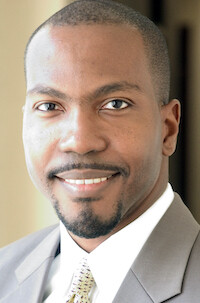
Herndon L. Davis is author of the book Black, Gay & Christian: An Inspirational Guidebook to Daily Living, published in 2004.