
St. Paul’s Episcopal Church, Chatham, N.J.
Readings for the Fifth Sunday after Epiphany: Isaiah 6:1-8, Psalm 138, 1 Corinthians 15:1-11, Luke 5:1-11
There are miracles and then there are miracles. In this passage, the one that is the most obvious is the great catch of fish. But, the miracle that affected me most profoundly is the one that is not obvious. Indeed, it is very subtle. It’s the miracle of Peter’s worthiness in the sight of Jesus.
I count “being made worthy” no small miracle. It is an amazing, powerful event in the life of faith which defies explanation and cannot be contained by words. Because of that, it is also dangerous. It can be as easily mishandled as it can be put to use for the glory of God. But, I move too fast. Let me begin by talking about feelings of unworthiness, which can also lead to the damage of one’s soul, and even more powerfully, the damage of the souls of others.
Some of you may be aware of my work on the New Commandment Task Force. For over two years, I went right into the belly of the beast of controversy and sat among Episcopalians across the nation who described themselves as Liberal/Progressive, Conservative/Evangelical, and Moderates. I learned a great deal about my own life and the life of the Church, but I also learned a great deal about the issue of worthiness and feelings of unworthiness.
I have come to believe that “unworthiness,” like most categories of sin, is a social disease. Like most social diseases, is an “equal opportunity” sin, affecting people regardless of gender, age, race, social status or educational background. Like most sins of prejudice, it has to be carefully taught. Some of us are taught by supercritical parents. Others suffer quietly in the shadows of “star siblings,” and while loved by parents, never quite live up to the expectations of teachers or coaches. Still others are carefully but subtly taught by society that gender, race, age, physical ability, sexual orientation, educational background or class status render us unworthy.
Those who have been carefully taught to feel unworthy fall beyond the traditional understanding of sin as hubris, pride. Indeed, for those who feel unworthy, the sin is often not having enough pride in themselves, suppressing so many of their own needs in service of others that there’s barely any self left. This can result in a secret hostility that is always concealed by acts of kindness – or as anxiety which is unnecessarily guilty about any self-assertion.
The church serves as a magnet for those who are plagued with unworthiness, often exploiting the theology of servant leadership and deepening the sense of worthlessness – except in acts of service to and within the church. We have all known church leaders – lay and ordained – who operate on guilt, fueled by anxiety, and harbor secret hostility just under the surface of acts of ministry. It’s the stereotype of the ‘church smile’ under grit teeth. “God loves you just the way you are, now come and change to MY understanding of who God is and how you should live.”
My experience on the NCTF taught me that the most vehement cries for conformity to “orthodox” belief and behavior, which eliminates certain people from being seen as worthy of ordination or blessing, often has its origins from a deep, dry, empty, bottomless well of unworthiness. Dip into that well, and you will find your cup filled to overflowing with anxiety, guilt and secret hostility.
In common parlance, this dynamic is often referred to as “should-ing” on someone. We all know people like that. Indeed, we may, ourselves, be a “should-er” if we stopped long enough to listen to ourselves talk. He should. She shouldn’t. I should. We shouldn’t. Should, should, should. We “should” all over ourselves and others. I am convinced that people who “should” on themselves and others are suffering from the social disease of unworthiness. If left undetected and untreated, can lead the unsuspecting soul to deeper, more serious sin.
Okay, hold on. I can see where some of you think I’m going with this. Am I saying that there is no sin of pride? That we should all put our own needs first and to hell with what anyone else thinks or feels? By no means! I am often in awe of God’s miraculous interventions in my life, and wonder how it is that I am deserving of such unconditional love. Perhaps that explains why I can never stop crying when I sing the hymn “How Great Thou Art,” and get to that verse “And when I think/that God his Son not sparing/sent him to die/I scarce can take it in,” I can never hold back the tears. You’ve heard me preach it before: God is God and people is people. Fr. Koumaranian said it, I believe it and that settles it.
What I am saying is that we would all be much healthier – socially and spiritually – if we understood our own uniqueness, our own worthiness, in the sight of God. What I am saying is that our lives (and, indeed, the life of the Church!) would be better able to “repent and return to the Lord” if we could forgive ourselves FIRST for the limits of our own humanity. This would enable us to more readily forgive others theirs – especially when they don’t live up to OUR expectations and understandings of what Scripture says God wants.
Sometimes, our worst demons are the ones we create ourselves. Let me give you an example. I want to tell you the story of the life and death of the Rev’d Bernard Healy, former rector of House of Prayer, Newark. Bernie was a delightful Irish imp – full of practical jokes and laughter – who came from the hardscrabble, blue collar, factory-working Irish Roman Catholic neighborhoods of Worcester, MA. He had entered Roman Catholic ‘pre-seminary’ in his late adolescence, but had been denied access to the ordination process when he came to understand the truth of his sexual orientation, and dared to share that truth with his superiors.
As so many do, Bernie eventually found his way to The Episcopal Church, where he was able to fulfill his vocational call. He was a good urban priest, fashioning his life and his ministry on the Catholic Worker model. He lived among the poorest of Newark’s poor and fashioned his life in solidarity with them. Sometimes he didn’t have enough to feed himself because he gave so much of his own food away to those who knocked at the rectory door. That never bothered him, though, because he knew he was only one or two phone calls away from mooching a meal from one of his clergy colleagues. We never minded, but eventually we came to figure out the pattern to his mooching and understood how deeply committed he was to his ministry. Or, was he?
First clue: Bernie was a alcoholic. Why? What secret torment led him to anesthetize himself? We would learn, eventually. When he was diagnosed with AIDS, he was devastated, but he resolved that, with whatever time he had left, he would live his life as fully as he was able. He took advantage of an “early retirement” which enabled him to live on disability, social security and pension, and resolved to work without pay helping the poor and those with AIDS. His illness progressed rapidly, and within months, he was incapacitated and soon on Hospice care.
When he could no longer care for himself, we moved him into our own home where we could care for him until he died. A group of four friends: Lyn Headly Moore, Fr. John Nickas, a Roman Catholic colleague from Newark, Pat Connell, the wife of the then president of Christ Hospital, Jersey City, and Bishop Jack McKelvey joined Barbara and me in caring for him. It formed a bond among us that still remains strong, despite our differences.
As he grew closer and closer to the close of his life on earth, Bernie developed something which was absolutely unnerving to witness. He would stare off at a particular place on the blinds of the window and his energies would become very intense. After a while, it became very apparent that he was having a conversation with something or someone at the blinds in the window. Finally concerned enough to say something, I took a deep breath and said, “Bernie, it’s okay. You can go now.”
He took a moment to move his gaze from his spot at the window blind, looked at me and, grinning impishly said, “If you tell me to ‘go toward the light’ I may laugh hard enough to pee my pants.” He grew quiet again and turned his attention back to the spot at the window blind. I took his hand in mine and, after awhile I said to him, “Bernie, honest to God, you can go now. It’s okay.” He again took a moment to move his gaze and look at me, but this time, there was no impish grin but real terror on his face. “They won’t let me in,” he said.
They won’t let me in! Suddenly I understood. Images began cascading before my eyes: The little Irish kid from a poor neighborhood, wanting to get into college so he followed the path through the door of the church. They won’t let me in! The adolescent boy in pre-seminary who understood that his sexual orientation was different from others. They won’t let me in! The Episcopal priest who always struggled against prejudice about monetary and educational and class status. They won’t let me in!
Suddenly I realized that so much of Bernie’s ministry came out of that deep well of guilt and anxiety and secret hostility. I came to understand that it was his unworthiness which was the driving force of his self-sacrificial ministry. It also fueled his need to anesthetize with alcohol the pain and anxiety and secret hostilities about being so different in so many ways than “the norm.” I realized that he had suffered years of this untreated social disease of unworthiness, and he had transformed it for the good, doing a wonderful work of ministry. Even so, it had also led him to create his own demons, which he was now fighting even unto death.
And, just as suddenly, I found myself very, very angry. “Bernie Healy,” I said, unable to control the fact that I was raising my voice, “You tell those people at the window that they MUST let you in. You tell them that you ARE worthy to pass from this life to the next and they can’t stop you. And, you tell them that if they won’t let you in, they are going to have to deal with ME.”
Without changing a muscle in his expressionless face, he looked at the window, nodded his head toward me and said, “Be afraid. Be very afraid.”
Bernie died 24 hours later – a peaceful death in the middle of the night with all of us gathered round his bedside singing, “Amazing Grace,” and “How Great Thou Art.” He died a holy death, spiritually whole and healed of the sin of his own unworthiness, surrounded by angels who carried him straight to the God who loved him into this creation and accepted him back home again with an even greater love.
Bernie said, “They won’t let me in.” I hear this as an echo of Peter’s confession, “Go away from me, Lord, for I am a sinful man.” Jesus responded to Peter, “Do not be afraid.” It is a fearsome thing, indeed, to be so unconditionally loved. Sometimes, I scarce can take it in. Peter’s eventual understanding of his own worthiness allowed him to hear the worthiness of all people – even the Gentiles – and to spread the gospel to the ends of the earth. This kind of radical inclusion is at the very center and core of our faith; indeed, it is its lifeblood.
There are miracles and then there are miracles. Some are obvious. Sometimes, the most powerful ones are those that are hidden and subtle. Sometimes, God can not work miracles in our lives before battering down the doors of our heart with little miracles that tell us how much we are love unconditionally and how precious we are in God’s sight. After St. Paul was knocked off his high horse, even he was able to say, “By the grace of God, I am what I am.” Our Eucharistic prayer assures us that “we are made worthy to stand before God.”
How much stronger might we be – might the church be – if more of us understood the miracle of God’s love – before we labor to take our last breath?
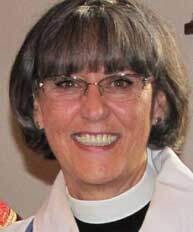
An Episcopal priest in the Diocese of Newark (N.J.), the Rev. Elizabeth Kaeton served as national convener of the Episcopal Women’s Caucus and board member of Integrity USA and the Religious Coalition for Reproductive Rights. A founding member of Claiming The Blessing, she earned a doctorate in pastoral care and counseling from Drew Theological School. She blogs at http://telling-secrets.blogspot.com.