
There’s another argument to be made when we fight state and federal marriage amendments. It has the potential to take back the debate because it’s about the Constitution and the First Amendment’s guarantee of religious freedom.
There’s no doubt that the need for marriage equality is first and foremost about the civil and legal benefits that currently come with government recognition and approval of two people’s legal commitment to each other.
It might be that the ultimate solution to the issue is to recognize marriage as only a civil issue with its legal benefits for everyone. Couples could then add the blessings to their union of a religious institution of their choice if they desired. Yet the history of marriage in US culture and consciousness is one enmeshed with religious images, sanctions, and overtones. That means that we must take those connections in American consciousness seriously.
There is an established legal history in this country that state governments license religious leaders. In fact, the only civil benefit of such government licensure is that ministers, rabbis, priests, and other state-approved leaders can then perform marriages for the government.
Most marriage ceremonies are performed in churches and by clergy, and many pro-marriage-equality clergy would love to be able to perform them for the many LGBT people who’d prefer to get married in a religious setting.
The language of marriage as “sacred” invokes religious images. Fighting those images is difficult. We need a new way to use them to express progressive values.
Berkley linguist George Lakoff in Don’t Think of an Elephant (2004) recommends we use the idea of sanctity, even if it’s not religious, when we speak of marriage equality. “Sanctity is a higher value than economic fairness,” he advises. “Talking about benefits is beside the point when the sanctity of marriage is in dispute. Talk sanctity first.”
The arguments behind the federal and state marriage amendments are essentially religious. Right-wing think-tanks play on what have been the dominant cultural religious sentiments, but they also know that they must act as if their crusade is not the imposition of a sectarian religious understanding. So, they couch their arguments in terms of inaccurate history, poor science, rejected psychological theories, and statistics unsupported by the social sciences.
Based on right-wing understandings of the Bible, tradition, and God, amendment proponents argue that same-sex marriages don’t suit a traditional model of one man and one woman. One need not look deeply into the Hebrew Bible or Old Testament to see that even among the Patriarchs, Ten Commandments-giver Moses, and hero-kings such as David and Solomon polygamy was common and traditional.
Even early members of the Church could be polygamists. Otherwise, why would the writer of the first letter to Timothy say that he should pick from the diverse membership, men for church leaders who were “the husband of but one wife?”
These clear Biblical practices must be explained away by the right-wing to make an argument that supports their sectarian understanding. Even “traditional” has to be defined quite selectively to eliminate all the cases of polygamy in world history.
It surely is the height of irony that the Mormon Church has been a major funder of amendments claiming that traditional marriage has been between one man and only one woman. Even its second prophet and president, Brigham Young, married some 50 women.
People looking instead for real histories of traditional families will be interested in reading historian Stephanie Coontz’s two exhaustive studies: (1) The Way We Never Were: American Families and the Nostalgia Trap (2nd ed, 2000) and (2) Marriage, a History: From Obedience to Intimacy, or How Love Conquered Marriage (2005).
But, it’s time also to recognize that there are many religious people who believe that the Bible, tradition, and God actually require them to confirm same-sex commitments. Their religious beliefs about morality, love, commitment, and marriage demand that they recognize and celebrate loving commitment wherever it is found.
They believe that government has no business telling God, the Church, and any two consenting adults whom they can and cannot love.
Unitarian Universalists, the United Church of Christ, and the Central Conference of American Rabbis have spoken out of their faith to testify that affirming same-sex marriages is a response of true belief. It arises out of the very central tenets of their faith.
It’s time to change this debate and expose it for the imposition of the sectarian religious position that it is. It’s time for liberal religious people to state so clearly. And it’s time for all of us to invoke the First Amendment in this matter.
Amending the Constitution to forbid these religions from performing same-sex marriages violates both clauses of the First Amendment of the Constitution’s Bill of Rights. It’s both the “establishment” by the government of one religious position as well as “prohibiting the free exercise” of the religion of others. It’s religious discrimination at its core.
The Federal Marriage Amendment recently defeated again by the Senate must be put to rest permanently because it is anti-American. Yet, it’s anti-American not only because it would be the first amendment to write discrimination of a group of people into the Constitution. It’s also anti-American because it destroys religious freedom. It forbids the religious practice of clergy, denominations, and religious communities that believe they are divinely called to affirm the love of two adults who happen to be of the same gender.
To stand up against this sectarian religious abuse of the Constitution, it only takes the courage to say and repeat: “If you’re for the Federal Marriage Amendment, you’re for destroying religious freedom?”
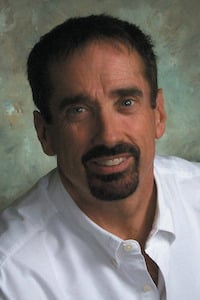
Professor Emeritus of Religious Studies at the University of Kansas where he taught for 33 years and was department chair for six years, Robert N. Minor (he/him), M.A., Ph.D is the author of 8 books as well as numerous articles and contributions to edited volumes. He is an historian of religion with specialties in Biblical studies, Asian religions, religion and gender and religion and sexuality. His writing has been published in Whosoever since 2005 and he continues to speak and lead workshops around the country. In 1999 GLAAD awarded him its Leadership Award for Education, in 2012 the University of Kansas named him one of the University’s Men of Merit, in 2015 the American Men’s Studies Association gave him the Lifetime Membership Award, and in 2018 Missouri Jobs with Justice presented him with the Worker’s Rights Board Leadership Award. He resides in Kansas City, Missouri and is founder of The Fairness Project.