
The dawn of a new year presents LGBTQ+ people with so much more than just a new page on the calendar: We have a profound opportunity to turn the page on religious narratives that have been wielded against us as tools of exclusion rather than sources of affirmation. The result being that we, as vibrant and diverse as we are, are still largely cast as outsiders in our own spiritual homes.
But what if we resolved to stop knocking on doors that refuse to open? What if instead we built our own house with foundations of love, resilience and radical inclusivity? This new year, I believe it’s time to reclaim the theological and spiritual leadership that is our birthright.
The path forward is not about seeking permission, but about asserting our presence — boldly, unapologetically, and with intention.
So what does that actually look like?
It means we claim space — in every sanctuary, classroom, and gathering where spirituality is discussed. No more sitting quietly at the edge of the conversation, hoping to be acknowledged.
It means we show up with our stories, our faith, our wounds and our wisdom. When the door is closed, we find new places to gather. We create our own spaces: LGBTQ+ interfaith panels, spiritual retreats that center queer voices, public rituals that honor the complexity of our identities.
To redefine spiritual leadership, we no longer need to wait for old institutions to catch up. We can be the architects and the leaders, starting today.
It means we foster mentorship programs for young LGBTQ+ theologians, offer scholarships for those pursuing religious studies, and establish fellowships dedicated to amplifying queer perspectives in faith-based discourse.
It means we write our own liturgies, reinterpret sacred texts, and curate prayers that resonate with our lived experience. Visibility becomes our tool and legacy.
When we step into leadership, when our faces and voices become part of the narrative, we make it impossible to ignore the holiness within our community.
Every action, no matter how small, coalesces into a movement that outlasts any single person. By publicly celebrating queer-affirming spiritual milestones — weddings, ordinations, naming ceremonies — we send ripples through society, showing the world that our love, our faith and our presence are not debatable topics.
Our advocacy turns inward as well: We educate ourselves and others, confronting the biases that linger within and between us. In doing so, we create a model for liberation theology that the wider world cannot help but notice.
How do we assert our presence? For starters, we’re already here. The difference now is that we refuse to be invisible any longer. Through deliberate, visible action and intentional community-building, we lay claim to a future where our spiritual leadership is undeniable, transformative and lasting.
Simultaneously, we must turn inward and confront our own challenges. We are a beautiful mosaic of identities, but this diversity can sometimes lead to fractures.
Are we truly creating spaces where a trans person of color feels as welcome as a cisgender white gay man?
Is the spiritual journey of an asexual individual honored with the same reverence as that of a partnered lesbian?
Unity does not mean uniformity. It means creating brave spaces where interfaith dialogue is not just encouraged but is the norm. It means listening to the atheist and the agnostic with the same respect we ask for ourselves from the religious. Our strength is forged in our ability to hold these multiple truths at once.
Overcoming centuries of historical exclusion is a monumental task. The trauma inflicted by religious institutions is deep and real. Healing requires more than just theological debate; it demands the creation of tangible, safe spaces for spiritual exploration.
This could be a meditation group in a community center, a queer-centric Bible study hosted online, or a pagan circle celebrating the solstices in a public park.
If you’re looking for an affirming church with no hidden asterisks for LGBTQ+ people, the Metropolitan Community Churches and Unity Fellowship churches have decades of experience doing the lifesaving work of reminding us that we not only do LGBTQ+ people have a place at the table, but we deserve visibility, and we belong in leadership.
If there is one theological statement that saved my own life, it was when Rev. Elder Troy Perry said without apology, “The Lord is my Shepherd and he knows I’m gay.”
But denomination doesn’t have to be the answer, either. My own congregation found a way two decades ago to worship literally as a church without walls by leaving the strictures of worshipping inside a building after having left traditional polity behind from the day of its founding in 1998. These two moves have allowed us to be affirming in ways that feel so much more authentic than a tagline on a website.
So many churches stretch themselves to be some version of open, welcoming or affirming but still find themselves contorted by creeds, polity and dogma that contort these well-meant desires via a gauntlet of policy.
Truly affirming someone is an act of validation that seeks to empower and lift up without judgment. To affirm means to build trust, respect and understanding between two people or within a community of faith, fostering a deep connection of agape-style unconditional love.
Having said all that, my congregation recently chose to join the Progressive Christian Alliance following years of mutual relationship, dialogue and exploration. In their own words, they are:
… A network of people who strive to follow the teachings of Jesus. We come from various Christian denominations but rally together around the principles of justice, respect, and inclusion. Both laity and clergy from many traditions have found a home within the Progressive Christian Alliance. We are Catholics, Anglicans, Methodists, Baptists, Pentecostals, Presbyterians, Mennonites.
We are a denomination, but not in the traditional sense. We affirm calls to ministry through Holy Orders (ordination), welcome lay members, and have faith communities and affiliated ministries, but we are powered entirely by volunteers and eschew big-institution trappings. And if you believe Jesus taught that we should care for our neighbor, and strive to respect others and deny no one their rightful place at God’s table, we welcome you to join us!
And in an age when drag itself has been demonized as somehow dangerous to children and/or one of society’s greatest ills, Rev. Matthew O’Rear of St. Luke Lutheran here in my adopted hometown of Atlanta has helped take the narrative back by bringing drag squarely into the church via an annual “Drag Me To Church” event during Pride month. His bio statement frames his pastoral mission thus: “Since entering public ministry in 2008, Pastor Matt has been passionate about helping people embrace a faith that is both deeply rooted and outwardly engaged. His work is grounded in the belief that the Gospel calls us to love boldly, stand with the marginalized, and create communities where all belong.”
It’s sanctuaries such as these, free from judgment and dogma, that allow us to explore our connection to the divine on our own terms. It’s in spaces such as these that we can heal, question — and ultimately, build — a faith that sustains us. And this is just the beginning; there is so much more room for expansion.
For instance, this year we’re all invited to participate in a National Pride Interfaith Service that is designed to put LGBTQ+ spirituality proudly and boldly out front for the world to see.
The world often sees us through the lens of our struggle. They see our fight for rights, our defiance against prejudice. But our greatest power, our most revolutionary act, is our capacity for love.
It is a love that has endured condemnation, a love that has built chosen families, a love that has cared for the sick when others turned away. This is the core of our spiritual authority. Our shared humanity, our resilience in the face of adversity, is a testament more powerful than any scripture used to deny us.
As we face the coming year, we should refuse to beg for scraps at tables built on exclusion, and instead craft our own sanctuary from the ground up, bold enough for every voice and every story.
We’re not here to inherit broken traditions or recycle empty rituals. We’re here to birth something unapologetically new: Prayers that sound like us, celebrations that honor all of us, and sacred spaces where every person is seen, heard, and held.
This isn’t a request for validation from systems that once shunned us. It’s an unyielding declaration: We are the architects now. The future of faith is not waiting for permission; it is demanding transformation — and we are the revolution that will not be ignored.
The time for waiting is over. We are the new standard-bearers of spirit. Watch us — better yet, join us — as we lead the way.
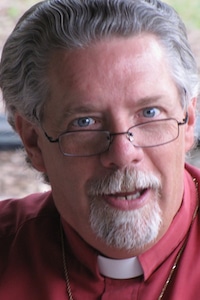
Editor-in-Chief of Whosoever and Founding and Senior Pastor of Gentle Spirit Christian Church of Atlanta, Rev. Paul M. Turner (he/him) grew up in suburban Chicago and was ordained by the Universal Fellowship of Metropolitan Community Churches in 1989. He and his husband Bill have lived in metro Atlanta since 1994, have been in a committed partnership since the early 1980s and have been legally married since 2015.