
Every time I reach for my wife Caroline’s hand in public, I pause. It’s such a small gesture — two hands brushing — yet it can still feel as if it’s an act of courage. That hesitation says a lot about what it means to be LGBTQ+ in Europe today.
Since relocating from the U.K. to France, I’ve been noticing the LGBTQ+ experience across Europe with fresh eyes. To be fair, there aren’t many differences — the same uncertainties, the same questions about safety and belonging.
I’m naturally shy, but shyness isn’t the whole story. I still hesitate to hold Caroline’s hand or kiss her cheek because you never quite know who’s watching — or what they believe they’re entitled to say. I’ve heard religious language, including Christian language, used to justify contempt. Sometimes that contempt turns loud. Sometimes it turns dangerous.
I think of what happened in Spain on March 22, in La Bañeza (León): A trans woman was targeted with slurs in a nightclub bathroom and then attacked by a group reported to be around 10 people. She was left bruised with a serious eye injury. The Guardia Civil national police later arrested five women ranging in age from 18 to 24, and the case was investigated as a hate‑motivated offence.
I don’t share this to sensationalise anyone’s suffering — only to name what stories like that do to us. They travel fast, and they land in your mind like a warning — a need to be careful, not to draw attention, not to assume you’re safe.
That’s why so many of us are afraid to simply be ourselves. It can be a frightening world — one where love still provokes violence, and visibility can feel like risk. Yet every act of openness, every hand held in public, becomes a quiet kind of courage.
I remember a church lunch years ago at a Christian family’s home in the U.K. People were chatting, plates clinking — the kind of ordinary gathering that should feel safe. I overheard a group talking about “gay people,” and a church elder said, “What we need to do is line them all up and shoot them.” I will never be able to get my head around that — or the fact it came from someone meant to lead with love.
And yet, I’ve seen same‑sex couples walking hand in hand, free and radiant. It looks effortless. About three years ago at Charles de Gaulle Airport in Paris, Caroline grabbed my hand and whispered, “It’s more accepted in Paris — most of the time.” We kept going, smiling, daring to be visible.
At work, the tension is quieter but constant. I’m a teaching assistant at an English school, and I know a few people connected to the school disagree with my “lifestyle.” I worry a parent might object to a lesbian helping their child with reading and comprehension. I never take acceptance for granted.
And it isn’t only “out there” on the street. In France, recent reporting suggests that discrimination — and even physical aggression — against LGBTQ+ employees is rising, with trans people facing the sharpest edge of it. Reading that, I recognised the way fear can shrink you: the calculation before you speak, the instinct to edit yourself, the temptation to keep your private life invisible just to keep the peace.
My wife Caroline was born in Paris. She came out at 16 and was promptly asked to leave home — her family were Catholics.
She says the fear feels different now. Back then, shame did much of the policing: shame imposed by family, church, and culture. Today, the fear comes from the far right. The aggression is louder, the rhetoric sharper. It makes you cautious in public even when you just want to live normally.
Last week we spent a few days in Honfleur in Normandie— it was beautiful. We popped into a shop for trainers. At the checkout, the young woman serving us looked about 18 or 19, shy and nervous. As Caroline chatted with her in French, it became clear she was a lesbian.
Caroline smiled and said, “This is my wife — we were recently married.” The young woman’s face lit up. She congratulated us, beaming, and I was reminded why visibility matters: Sometimes it gives the next person permission to hope.
It’s incredible that we still can’t enjoy simple affection without fear. We watch heterosexual families in parks hugging freely, never thinking twice. I keep asking myself: is it better to live openly, whatever the cost? Otherwise, I’m living a life shaped by other people’s prejudice.
Still, there are many who wish us well. Caroline’s family now see her as a hero — brave enough to live truthfully despite rejection. Her two oldest aunts, both in their nineties, proudly tell people their niece is married to an English woman.
I’m proud to have Caroline as my wife, and I want the world to see that love. We dream of a time when everyone can choose freely — to love, to believe, to live — without fear of what might follow; when respect isn’t conditional. Maybe that’s a hope too far. But it’s one we’ll keep holding.
Since moving from the U.K., I’ve realised I’m still finding my feet — learning a new country and its unspoken rules about what feels safe. But Caroline and I keep coming back to the same conviction: We don’t want fear to be the loudest voice in our life together. We want to be the change we’re longing for — the kind of ordinary visibility that quietly tells someone still living in the shadows, “You have hope; you have a future.”
When I look at the life of Jesus, I don’t see someone who played it safe for the sake of social comfort. I see courage — a love strong enough to cross boundaries, confront cruelty, and dignify the people others preferred to shame. For me, Jesus sits at the centre of everything good I still believe about the world: Truth, mercy, steadiness, love. And I keep coming back to this: The light of Jesus is stronger than the darkness — and it’s that light I’m learning to trust, day by day.
I’m asking for that same Spirit in me: Love that doesn’t harden, strength that doesn’t boast, and courage that keeps showing up. Until the day love is truly ordinary, we’ll keep walking forward — and when we can, we’ll keep reaching for each other’s hand.
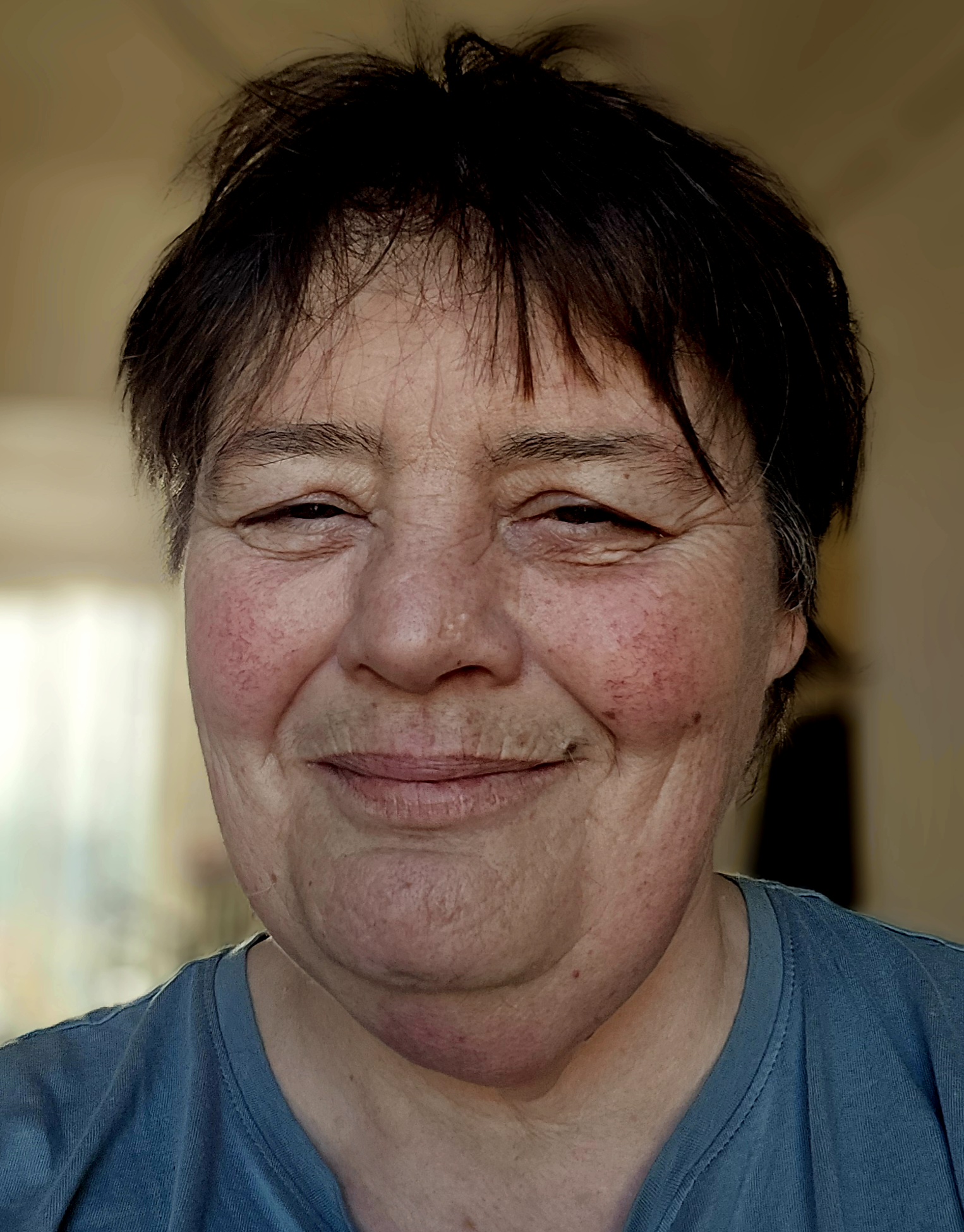
Based in France, Liz Queyrel reports on LGBTQ+ Christian life across France and greater Europe.