
WWDD: The Gospel of Dolly Parton
There’s a social media post going around that goes something like this:
I’m just tired of everything being political.
So am I.
I’m tired of whether a child gets lunch being political.
Whether a sick person gets medicine being political.
Whether a family gets to stay housed being political.
Whether clean water is worth protecting being political.
Maybe everything feels political because we turned basic human decency into something you have to vote for.
And it’s that last sentence I can’t stop turning over in my mind: Maybe everything feels political because we turned basic human decency into something you have to vote for.
And I’m thinking I’m not the only one. As I’ve watched America and the world grieve the loss of Dolly Parton for days, I’m sure I’m not the only one who understood that our grief was not only for the loss of a tremendous human, but also for the loss of someone who felt like the last decent person we could all agree was a decent person.
I don’t know if that says more about Dolly — or about us. Something tells me it’s both.
How exactly did we get here?
Well, for starters, as the quote above makes plain, we as a society can’t seem to agree on whether a child gets lunch. Whether a sick person gets medicine. Whether a family keeps a roof over their heads. Whether the water we drink is worth protecting. Whether a trans person reads stories to kids. Whether people of the same gender can love deeply and intimately.
Somehow, everything that should be common sense now arrives to us pre-sorted into camps, stamped with party loyalty, fought over like territory.
And I keep asking myself: How did we get here? How did feeding the hungry become a position instead of a practice? When did we start treating basic human survival — indeed, human dignity — as a matter of opinion?
I don’t think this happened by accident. I think it happened because those folks now in control planned it that way. It was never about being decent — it was and is about erasure.
You can be rich in spirit, kindness, love and all those things that you can’t put a dollar sign on. (Dolly Parton)
Here’s the quiet violence of politicizing decency: It lets people feel principled while they withhold. When a hungry child becomes a “policy debate,” we no longer have to look at the child. When a family losing their home becomes a “housing issue,” we get to argue instead of act. We build a wall of “talking points” between ourselves and the people right in front of us, and we call it “conviction.”
But it isn’t conviction. It’s distance. And distance is how we allow ourselves to turn away.
I know this pattern intimately, because I have watched it aimed at people I love. I ‘ve watched it aimed at me.
If you want to understand what it feels like to have your basic humanity treated as a ballot measure, ask someone who is both LGBTQ+ and a person of faith. We have spent our whole lives watching our dignity get treated as an “issue.” Our love is debated in committees. Our safety is negotiated in legislation. Our very lives are dragged through and beaten, sometimes to death, in the streets. Our very belonging — in the sanctuaries where we come to pray — is put up for a vote by people who may never have even asked our names.
I try to see the good in everybody, and I don’t care who people are as long as they’re themselves, whatever that is. (Dolly Parton)
Think about the stupidity of that. Whether a person is worthy of a pew. Whether a young person gets to keep their faith and their family at the same time — or must choose between the God they love and the parents who love them. Whether someone gets to stand at the front of a room and marry the person they’ve built a life with. Whether they get to bury that same person with honor when the time comes.
These are not abstractions to us. These are daily conversations. They are the hard conversations at kitchen tables, the anxious walks into congregations, the prayers whispered in cars in the parking lot before working up the courage to go inside.
Somewhere along the way, the church decided we were positions to hold rather than people to love. And that decision has cost real people real years of their “one wild and precious life,” as the poet Mary Oliver referred to it.
So, when someone says decency has become something you have to vote for? Yes. We feel that in our bones. It resides in our souls. We have been the thing being voted on.
And yet, here is what I keep circling back to, what I cannot let go of. What I will never let go of.
The One so many of us follow did not gatekeep grace.
Look at the Gospel stories. Really look. Jesus did not ask the crowd on the hillside for their credentials before he fed them. He didn’t run a housing check on the five thousand. He didn’t screen the sick for worthiness, demand the tax collector clean up his politics before dinner, or ask the woman at the well to explain her marital history before he offered her living water. He just showed up. With bread. With healing. With a welcome so wide it scandalized the religious authorities of his day.
God tells us not to judge one another, no matter what anyone’s sexual preferences are or if they’re black, brown or purple. (Dolly Parton)
That’s the part they forget or ignore. The people most offended by his radical decency were the ones who had built their entire identity around drawing the lines. The insiders. The gatekeepers. The ones certain they knew exactly who belonged and who didn’t. And again and again, he stepped over their lines and sat down with the people on the other side.
If that’s the pattern — and you and I believe it is — then a faith that spends its energy deciding who deserves care has gotten something backwards at its root. Radical and all-inclusive welcome was never a policy platform. It was the whole point.
So, let’s deal with the elephant in the room, the one that feels so big that it seems hard to know where to even begin. Let’s deal with the hard questions.
When did decency become a platform? When did feeding a child, healing the sick, housing a family, protecting the water we all drink, or living our sexual orientation, or our gender identity — when did any of that stop being holy and start being partisan?
I think the honest answer is this: The moment compassion became inconvenient, we found a way to make it optional. We dressed our reluctance in the language of principle. We turned love into a debate because a debate is something you can win — whereas love is something that costs you.
I am not gay, but if I were, I would be the first one running out of the closet. (Dolly Parton)
But a table is not a line. A line asks, “Who’s allowed?” A table asks, “Who’s hungry?” And the difference between those two questions is the difference between religion that wounds and faith that heals.
For those of us who are LGBTQ+ and people of faith, this isn’t theory. It’s the hope we’re staking our lives on — that the table was always meant to be bigger than the line. That the God who made us didn’t make a mistake — and doesn’t require a majority vote to confirm our worth.
So to you who’ve been referred to as an “agenda,” a “lifestyle,” a “controversy,” a “debate” — hear this clearly: You are not a position paper. You are not a wedge issue. You are not a problem to be solved or a question to be settled. You are made in the image of the Divine, whole and beloved exactly as you are, and no ballot on earth gets a say in that.
We cannot direct the wind, but we can adjust the sails. (Dolly Parton)
To everyone else — the seekers, the tired, the ones who’ve walked away from faith because faith walked away from them first — there is room here right at the table.
There has always been room. The community I believe in is one that hands out dignity freely, the way we were taught to, without checking whom you voted for or whom you love or how you pray.
The real work in front of us was never about picking a side. It’s about remembering that love was never supposed to be just one-sided.
Decency isn’t left or right. It’s not a plank in someone’s platform or a strategy for the next election. It’s the oldest teaching we have — to feed the hungry, house the stranger, heal the sick, and treat every single person as the sacred, image-bearing miracle they are.
We can keep asking whether people deserve care. Or we can stop asking and simply start handing it out. Freely. Without conditions. Without a vote.
I know what I’m choosing. The table is set, the door is open, and there is a seat with your name on it.
The only question left is: What are we going to do to make decency a lifestyle and “love wins” the result? When do we start? And who’s ready to reclaim it?
You’ll never do a whole lot unless you’re brave enough to try. (Dolly Parton)
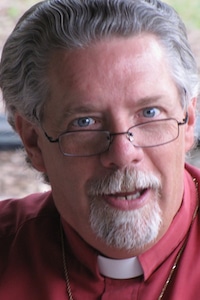
Editor-in-Chief of Whosoever and Founding and Senior Pastor of Gentle Spirit Christian Church of Atlanta, Rev. Paul M. Turner (he/him) grew up in suburban Chicago and was ordained by the Universal Fellowship of Metropolitan Community Churches in 1989. He and his husband Bill have lived in metro Atlanta since 1994, have been in a committed partnership since the early 1980s and have been legally married since 2015.