
After a lifetime shaped by fear, faith, and silence, one journey home revealed what had been quietly true all along: God had never left me.
I am writing this from my apartment in France. In November, I married my partner, Caroline. A month later, with my spouse visa finally in hand, I boarded the Eurostar back to France.
I remember feeling overwhelmed in a way that felt almost physical. At one point, I lifted my eyes to the window and simply stared, as though my body needed to become still before my mind could catch up.
We had just crossed into France, moving through the flat winter fields of Calais, when something caught my attention.
The sky.
Clouds were edged with gold as the sun began to set. The tones of the sky deepened and shifted, the clouds forming a picture: Layered light shaping what looked like a topaz-coloured sea, with a pale shore and distant cliffs held entirely within the sky. It wasn’t that these things were truly there, but that the clouds and colour had come together to suggest them — so vividly it felt as though a painting had been briefly revealed overhead.
The beauty of it stopped me. It felt less like weather and more like a glimpse — an opening — so that, for a moment, it was as if I were looking into eternity itself.
Without warning, tears began to stream down my face. I felt the presence of God — close, tender, undeniable — not distant or above, but nearer than I had ever realised. And in that moment, I knew something deep inside: He was here. He always had been.
To explain why that mattered so much, I need to take you back to where it began.
Christmas Day, 1973.
My very first memory.
I woke to a stocking at the end of my bed. Inside it was a small green frog attached to a yellow tube with a squeeze button. Every time I pressed it, the frog jumped. Delighted, I made my way downstairs, one hop at a time, into the kitchen, where my mum and dad stood with their arms around each other, smiling and laughing at my excitement.
I was three years old. I had no idea what lay ahead.
My mum was diagnosed with schizophrenia when I was young. Before long, I became a child carer. Truancy officers and social workers visited regularly, asking why I wasn’t at school. The truth was simple: My mum was very unwell.
I watched her hallucinate, panic, and hear voices no one else could hear. Sometimes she hurt me. And yet I never doubted that she loved me. I knew she was ill.
My dad worked during the week and preached most Sundays at strict Baptist chapels.
Growing up in a strict Baptist church shaped me long before I had the words to understand it. The sermons were heavy with warnings about sin, judgement, and the narrow path, and as a child I absorbed every word as if my life depended on it. I learned early that God was watching that one wrong step could cost everything, and that fear was meant to keep me safe. It created a constant pressure inside me — a sense that I had to be good, obedient, careful — because anything less might bring punishment or rejection.
Within this religious world — one that spoke constantly of holiness and righteousness — I was sexually abused on several occasions by three different men.
These men were respected. Trusted. Considered holy.
School offered little refuge. Children mocked my mum’s illness. I carried a deep sense of insecurity. I did not feel protected or properly held by the world around me. I worried endlessly — about my mum, about home, about what might happen next.
By then, life felt like a living nightmare.
Into this chaos, Jesus found me. Someone gave me three children’s books by Patricia St. John, and through their pages, light crept in. For the first time, I encountered God’s love through Jesus.
He was kind. He was close. He felt safe.
In the darkest moments, Jesus became light — steady, real light — chasing the shadows away. I also found comfort in nature: Fields, streams, trees, birds.
My mum was never well enough to look after me in the ways that mattered, and my friends laughed at me. I felt ugly, worthless, and I held a deep sense of not being good enough.
Time moved on, and with it, the shape of my life shifted again.
As a teenager, some of the clouds lifted. I buried memories as best I could and discovered sport. I dreamed of winning Wimbledon. I dreamed of a life with nice clothes, a beautiful house — a life where I was loved and accepted.
Growing up, I knew something about me was different. My friends were all sharing secrets about crushes on boys, teachers, pop stars — the usual teenage excitement — but none of it ever happened for me. I wasn’t interested in boyfriends at all. I can’t remember a time in my life when I felt any other way.
I fell in love with my best friend. At the time, she meant everything to me — she was my first love.
About a year into our relationship, my parents moved out of the area, and I was expected to go with them. I hated it. Unable to bear the thought of leaving, I ran away from home and went to live with my friend.
For the next two years, we were happy together, and for a time it felt like the only place I truly belonged.
Our relationship was discovered, and my friend no longer wanted to continue it. When it ended, I was forced to return home, believing my world had collapsed.
My mum and dad made it clear that same-sex relationships were a no-go area. The message was simple: If I got married, settled down, and did what was expected, all these feelings would eventually disappear and I’d become “normal.” That was the hope they held for me, and for a long time I tried to hold it too.
At twenty-two, I married. I was told I had a choice — obedience or hell. Fear, theological doctrines — rules summed up neatly in a phrase known as “the truth” — forced me into a marriage that should never have happened.
On my wedding day, one thought echoed in my mind:
No one will ever know who I truly am.
Suppressing my sexuality nearly destroyed me. It harmed me, and it harmed the man I married.
For years, I lost myself. I attended church, helped where I was needed, and cared for my mum. Inside, I felt numb and deeply depressed. I believed I was being holy — living faithfully, living the only life that pleased God.
There were moments when I did not want to live.
I learned how easy it is to appear fine on the outside while hiding deep pain and turmoil within.
For a long time, I believed my suffering was punishment from God — a belief reinforced by sermons filled with hostility and condemnation towards LGBTQ+ people. I learned how to survive by hiding behind a smile, appearing faithful.
I did not know then what I would one day understand: That the God I feared was not absent in those years of shadow, but nearer than I realised.
Eventually my marriage ended and we divorced. Despite everything, we have remained friends.
Today, I am married to Caroline, my beautiful French wife, and I live in France. We love each other dearly. We are both so happy — I would never have thought this possible.
This story began with light breaking through fear. Next I’ll share how I found the courage to ask questions in the face of it.
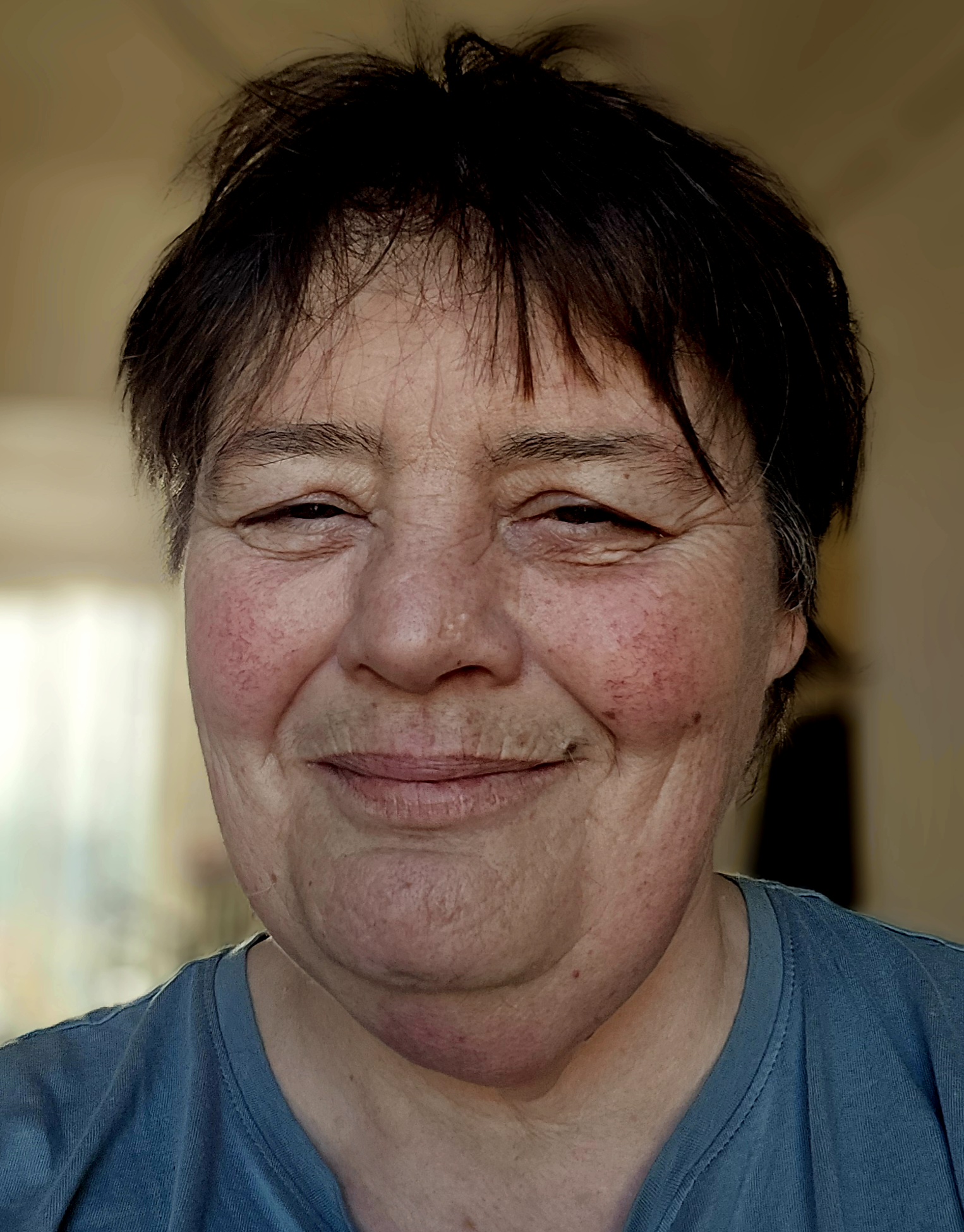
Living in France with her wife, Caroline, Liz Queyrel writes about faith, identity, hope, finding freedom after fear, and the resilience of LGBTQ+ Christians.