
Is literally everything forgivable?
Lent in the Christian faith invites us into a period of deep reflection. It is time to look inward, to examine the landscape of our own hearts, and to consider the paths of repentance and renewal.
As we walk this journey, the concept of forgiveness looms large, often feeling like a monumental task. We are told to forgive, but what does that truly mean, especially when the wounds are deep and the pain is real? Where do we find it in today’s world?
Consider the scene. A man, brutalized and nailed to a cross, hangs between life and death. In his final moments, surrounded by the very people who condemned him, he offers not a curse, but a prayer: “God, forgive them; they don’t know what they’re doing.”
These words from Luke’s Gospel are staggering. They are a profound display of compassion and mercy in the face of unimaginable suffering. This isn’t just a passive acceptance of fate; it is an active, radical act of grace.
Jesus was speaking to this particular moment
Was this the key moment to the resurrection? Who was Jesus speaking to in that moment? Was it only the soldiers carrying out their orders? The crowd that jeered? The powers that orchestrated his execution?
I have come to believe he was speaking to a much wider audience. He was speaking to us. We are “them.” We are the ones who, in our ignorance, our fear, our prejudice, and our apathy, cause harm.
We are the ones who participate in systems that marginalize and oppress. We are the ones who sometimes fail to see the divine in our neighbor.
Forgiveness, in this context, is not about excusing harmful actions. It is not a simple “get out of jail free” card that nullifies accountability. Instead, it is a recognition of shared humanity and a commitment to breaking the cycle of retribution.
Jesus’s call is not an erasure of the wrong committed against him; it is an appeal to a higher love, a love that refuses to be conquered by hate. He models a way of being that liberates both the forgiver and the forgiven from the prison of bitterness. Oh my God, from the cross… from the cross he does this!
Why is this so essential for a full life, both here and in whatever comes next?
The heavy weight of un-forgiveness
Holding onto un-forgiveness is like carrying a heavy stone. It weighs us down, tethers us to past hurts, and prevents us from moving forward. It drains our spiritual and emotional energy, leaving little room for joy, peace, or connection.
When we refuse to forgive, we allow the person who harmed us to continue occupying space in our minds and hearts, long after the initial offense. Is that the life we want to live?
This Lenten season, we are called to confront the stones we carry. The journey toward forgiveness is a pilgrimage of its own. It requires us to acknowledge our pain, to sit with our anger, and to honestly face the injustice we have experienced.
It doesn’t stop there. It calls us to the courageous work of release. This process fosters a profound healing, not just within ourselves, but within our communities.
When we choose forgiveness, we open the door to reconciliation. We create space for dialogue, understanding, and the rebuilding of trust. We declare that brokenness will not have the final word. Of course it doesn’t always work, but it is the effort that makes the difference.
This is the essence of renewal. By embracing the challenging, transformative power of forgiveness, we participate in the very compassion Jesus embodied on the cross.
We step out of the shadows of resentment and into the light of spiritual growth. We learn to see others — and ourselves — not through the lens of our worst moments, but through the boundless grace of a love that seeks to heal and restore.
These next six weeks, may we have the courage to lay down our stones and walk freely into a future defined not by what has been done to us, but by the radical, life-giving forgiveness that has been given to us and we choose to extend.
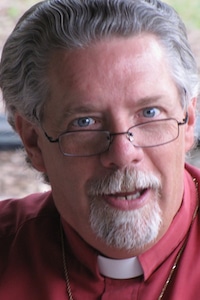
Editor-in-Chief of Whosoever and Founding and Senior Pastor of Gentle Spirit Christian Church of Atlanta, Rev. Paul M. Turner (he/him) grew up in suburban Chicago and was ordained by the Universal Fellowship of Metropolitan Community Churches in 1989. He and his husband Bill have lived in metro Atlanta since 1994, have been in a committed partnership since the early 1980s and have been legally married since 2015.