
Love the ‘sinner,’ period
If there are two phrases often lobbed at LGBTQ+ people that really get my blood boiling, they’re that old chestnut “Love the sinner, hate the sin” and any version of “Loving you doesn’t mean I have to like or accept you.”
Not long ago that I heard them both in the same day, and I have to admit that even after having been an out gay man for almost six decades and an ordained minister of the Gospel for more than half that time, I still came a little unglued at the thought of the disingenuousness that I firmly believe is behind each one.
Here’s why: I fully and firmly believe — perhaps naively, I admit — that a love that comes with conditions, qualifiers, modifiers or stipulations isn’t really love at all. But I’d rather be naive than jaded. Because do you know who else was jaded about love? Jesus Christ. And if I’m going to confess that Jesus’ ministry is my soul’s inspiration and that the life of the one we call the Christ is the example I’ve chosen to follow, I don’t believe I really have much of a choice.
Therefore, I believe that anyone who suggests otherwise fundamentally misunderstands the concept of love and distorts the universal values of equity, humanity and justice. Conditional love, by definition, falls short of being a pure, fully formed love; it’s alloyed with something that cheapens it — manipulation cloaked in affection, a transaction masquerading as care, a limitation placed on what should be limitless.
Why conditional love isn’t love at all
Love that comes with strings attached has its fingers crossed behind its back, and what gets dangled just out of reach are affirmation, acceptance and psychological safety. A love declared like that isn’t love at all — it’s garden-variety control, and it’s actually dangerous.
And placing such conditions on love and acceptance is dangerous not only to individual LGBTQ+ people, but also to the very fabric of our shared existence. I say this because of what I understand about the essence of unconditional love, the importance of equality and dignity, and the profound damage inflicted by those who treat love as something transactional.
After all, what does it really mean to love unconditionally? At its core, unconditional love is love without contingencies. It isn’t based on achievements, behaviors or conformity to expectations. It’s not a reward for living according to someone else’s standards. It simply is. And isn’t that what makes love so powerful?
When it comes to LGBTQ+ people, unconditional love means accepting individuals for who they are, not who society or tradition tells them they should be. It means affirming our inherent worth and value without judgment. To love us openly and without reservation is a radical act of justice, a declaration that our dignity is non-negotiable.
Conditional love, on the other hand, places an LGBTQ+ person in an impossible position. It demands that we shrink parts of ourselves, conceal our truth, mold our identities into shapes we assume will be more palatable to others. It’s an exhausting game of second-guessing. And in that sense, it’s not really love at all — it’s erasure. And erasure is violence.
How real love paves the way for equality
If we are to truly champion equality, as so many claim to do, then equality must apply universally. It cannot pick and choose. Anything less than unconditional love and acceptance undermines the entire premise of equality itself.
Imagine framing equality as a privilege rather than a fundamental right. That’s exactly what conditional love does. It suggests that LGBTQ+ people must somehow earn love, acceptance and respect (which, like grace, cannot be earned because it is our birthright) — as if there are somehow emotional prizes that can be handed out for proper behavior or compliance with some artificial construct of heteronormativity. This kind of conditionality reduces equality to a favor, one that is only granted at the discretion of the giver.
I mean, how do we expect to build a just society while also holding entire communities hostage to arbitrary conditions before we will deem them worthy? The truth is, in a society where every single LGBTQ+ person doesn’t wake up with their equality intact, then we’re all actually being robbed of it insidiously, on some level or another.
Therefore, conditional acceptance of LGBTQ+ individuals is far from being the neutral act that I’m sure many of its mealy-mouthed, morally deluded, shoulder-shrugging practitioners sanctimoniously believe it to be. It is deeply harmful, perpetuating a culture of shame, fear and rejection. Its effects ripple outward, influencing individual well-being, family dynamics, community cohesion, and society at large. It’s one of the fuels that powers the spiritual violence that still does real harm in our religious communities.
The real consequences of conditional love
Consider the overwhelming evidence linking conditional love — often disguised as “tough love” or “loving correction” — to higher rates of depression, anxiety and suicide among LGBTQ+ youth. When love is withheld until certain conditions are met, the unspoken message is clear: You are not enough as you are. You are not worthy.
This is not a conjecture. It’s reality. LGBTQ+ people who face rejection from family members, religious institutions or communities are at a much higher risk of experiencing homelessness, mental health crises and isolation. Conditional acceptance does not uplift; it destroys.
Even subtler forms of conditional love — say, the ones phrased as variations on “I love you, but…” — send an equally destructive message. Here the word “but” may as well be the most compact yet powerful psychological grenade in any language, undermining everything that comes before it. It qualifies; it hedges. In fact, the only thing it serves to clarify is that acceptance is limited, that love is contingent on some sort of performance or notion of change (as in, “pray away the gay”).
If we allow for the conditional love of LGBTQ+ people, then we need to examine what this says about our own values and beliefs. Does our own empathy come with asterisks? Do we see others as inherently valuable — or do we only value them when they fit neatly into our worldview?
Conditional love exposes the ways in which prejudice hides behind tradition or religion. It allows people to avoid reckoning with their own discomfort around difference, choosing instead to project that discomfort onto the lives of others. It permits injustice to masquerade as morality.
For those who find refuge or comfort in hiding behind “I love the sinner but hate the sin,” I say, first get our your mirror and take a nice long look in it. And second, consider that this childish phrase has for too long outkicked its coverage as a compassionate-sounding statement fully weaponized against LGBTQ+ people. What it misses entirely is that being LGBTQ+ is not a sin, nor is it a choice. Far from being either, it’s as much an identity, a core truth of someone’s being, as the color of their eyes.
So the passive-aggression embedded in the saying “I hate the sin” is that the speaker is really communicating that on some level they actually do despise the person they’re claiming to love. Imagine hearing someone say they love you, except for everything that makes you who you are. How can such a statement be anything but cruel?
This mindset also defies logic. It makes my head hurt. Other forms of prejudice often follow the same pattern of conditionality, but we recognize them as unacceptable. For instance, saying, “I accept you, but only if you stop being true to your race, culture or religion” is widely condemned as discriminatory. So why, then, would we tolerate such conditions being placed on LGBTQ+ people?
Granted, it’s not easy to love without conditions full-time — especially if that love feels like it conflicts with deeply ingrained beliefs, cultural norms or religious teachings. None of what I’m saying here is in denial of that — but also, neither our progress as enlightened beings nor as a society has eever been about clinging to comfort. It’s always been about (often uncomfortable) growth, challenge and transformation.
Real love changes society by changing us
Once we lean into it, unconditional love nudges us to confront the prejudices we’ve inherited and the biases we’ve internalized. It makes it easier for us to interrogate the systems and ideologies that teach us to see some people as “less than.”
It also guides us into active participation. Love, at its best, is not passive. Loving an LGBTQ+ person means showing up for them — not as saviors, but as allies. It means raising our voices against discriminatory policies and practices. It means creating spaces where truly everyone can thrive. It means educating ourselves, donating our resources, voting for change, and being willing to have hard conversations.
Society benefits when we nurture an ethic of unconditional love and acceptance. When LGBTQ+ people are welcomed as our full, authentic selves, our unique contributions enrich our shared experience. Creativity flourishes. Relationships deepen. Communities strengthen.
Consider the alternative. History shows us what happens when societies enforce exclusion, shame and conditionality. There is no shortage of examples — racism, sexism, ableism — all stemming from the same poisonous root of “othering.” Conditional acceptance is not some harmless deviation. It is part of a larger culture of oppression that stifles potential and fractures communities.
But when love is unconditional, it has the opposite effect. It plants the seeds of belonging, resilience and joy. And isn’t that what we all deserve? To belong. To feel safe. To live in the light of possibility rather than under the shadow of judgment.
To love LGBTQ+ people without conditions is to choose humanity over fear, justice over tradition, equality over supremacy. It’s to declare boldly and without hesitation that everyone has the right to live freely and authentically, without the burden of proving they are deserving.
The question, then, isn’t whether loving LGBTQ+ people can or should come with conditions. The question is, why do we even need to ask such a question in the first place? We know deep down that all people are worthy of love. We know this. We know that love is not meant to divide, but rather to unite. And we know that conditional love is no love at all.
The real challenge is whether we’re willing to live in alignment with these truths — even when it’s uncomfortable, even when it requires change, even when it demands that we stand against the status quo.
The time to answer that challenge is now. And the answer must be this: No more conditions. No more limitations. No more qualifiers. Love is love. And as such, it needs no justification.
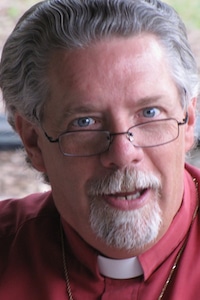
Editor-in-Chief of Whosoever and Founding and Senior Pastor of Gentle Spirit Christian Church of Atlanta, Rev. Paul M. Turner (he/him) grew up in suburban Chicago and was ordained by the Universal Fellowship of Metropolitan Community Churches in 1989. He and his husband Bill have lived in metro Atlanta since 1994, have been in a committed partnership since the early 1980s and have been legally married since 2015.