
Despite a recent Supreme Court ruling, the majority of Americans are still protected by bans
When the U.S. Supreme Court’s decision this spring to overturn Colorado’s ban on so-called “conversion therapy” for minors sparked a global reaction, much of it missed what the Court actually ruled. The outcome didn’t endorse “conversion therapy,” but it did significantly change the legal pathway for regulating the soundly discredited practice.
Here are the implications in the U.S. and beyond, including in my native Australia. It’s complex.
Colorado’s ban on “conversion therapy” for minors was passed in 2019. This was a part of a growing national trend that began in 2012 with California. Colorado had become the 18th U.S. state to introduce protections for minors. Australia began to enact similar legislation, beginning with Queensland in 2020, and the most recent state was South Australia.
How could something so established be overturned, and with such an overwhelming majority (8–1)?
The case, Chiles v. Salazar, was brought by Kaley Chiles, a Christian counselor in Colorado. She claimed the law restricted what she could say to clients, particularly those seeking to live in accordance with Christian beliefs. The issue was framed as a violation of her First Amendment right to free speech.
Many Americans view their federal Constitution with a level of reverence similar to how some believers approach the Bible. Both are considered sacred documents.
As with the Bible, the Constitution has limitations of interpretation, relevance, and context.
The fact that there are more than 40,000 Christian denominations shows that there is not one single interpretation of those Bible verses. Though many would tell us it is God’s inspired word, black and white (truth), it is only in their theological interpretation. The Constitution is the same.
That’s why, in 1973, the Supreme Court in Roe v. Wade held that a woman’s decision to have an abortion fell within a broader constitutional right to privacy protected by the Fourteenth Amendment. Nearly 50 years later, in a dramatic reversal, the conservatively Trump-loaded Court overturned that precedent, ruling that the Fourteenth Amendment does not confer a constitutional right to abortion. The amendment didn’t change — the interpretation of it did.
Another flaw in treating the Constitution as “sacred” is a question of relevance. The Second Amendment to own and carry guns may have made sense in 1789, but its application today is far less clear. From countries like Australia, when we see yet another mass school shooting, it’s difficult to comprehend why these tragedies continue because a nation is still anchored to a very recent change in the interpretation of gun rights.
What was really behind the Colorado challenge?
What’s easy to miss is that the legal argument didn’t emerge in isolation.
The Colorado case was backed by the Alliance Defending Freedom, an ultra-conservative Christian legal advocacy organisation with a long-standing strategy: Reshape U.S. law through carefully selected test cases. Over decades, it has advanced arguments centred on religious freedom and free speech, particularly in cases involving LGBTQ+ rights. The Southern Poverty Law Center, a well-known U.S. civil rights group that tracks extremism, classifies the ADF as an anti-LGBTQ+ hate group.
This ADF strategy aligns with the vision set out in Project 2025 — a coordinated effort to reshape U.S. government, law, and public policy around a more explicitly right-wing Christian-informed framework. While the ADF works through the courts and Project 2025 focuses on political power and policy, they are pulling in the same direction.
This wasn’t simply a therapist defending her practice; it was a calculated legal move — one piece of a much larger strategy to redraw the boundaries between belief, law and public life. We’ve seen this so blatantly in the Trump administration’s rollback of hard-won LGBTQ+ rights and the changes in funding and policy.
Here’s the evidence they’re ignoring
I’ve been in this game a looong time. In 1972 I was one of the first in the world to go through a Christian-based reorientation program. In 2000, several years after coming out, I connected with and began working with thousands of survivors of ex-gay/conversion “therapy” programs. I’ve been advocating on their behalf ever since and have been involved in having these practices banned in Australia and New Zealand. So not only have I been in the game for a long time, I know my stuff as well.
The evidence that conversion “therapy” style practices do not work, are harmful, and can be life-threatening is overwhelming:
- For starters, thousands upon thousands of survivor stories should be evidence enough.
- All major mental health professional organisations agree — attempts to change a person’s sexual orientation or gender identity have no scientific basis, do not work, and are harmful to the individuals.
- Leaders and “therapists” who previously believed in the teachings of so-called conversion therapy have denounced it.
The reason bans on this harmful practice have been passed in Australia and certain U.S. states has been to protect people, particularly youth, from the harm of well-meaning but misguided religious leaders, belief-based therapists, and religious parents.
The Supreme Court wasn’t lacking this evidence in the Colorado case. Survivors, parents, medical bodies, lawmakers and legal scholars all filed formal submissions urging that the ban be upheld. And they weren’t vague about it. The briefs laid out a consistent, evidence-based picture: these practices don’t work, and they do harm, described in the words of people who lived through it and of families who watched it unfold.
Medical organisations pointed to decades of research rejecting the idea that sexuality can or should be changed. Survivors described the damage done under the guise of care. Legal experts made the distinction clear: Regulating what happens in a therapeutic setting is not the same as censoring speech.
Strip it back, and the argument was simple. This isn’t about belief — it’s about what happens when belief becomes a practice that harms young people.
So, if all the evidence was there to support the ban and protect youth, why did the Supreme Court overturn the ban?
This was about speech, not harm
The Court treated talk therapy as speech, not medical conduct, and that distinction changed everything. Because once something is classified as speech, it becomes protected under the First Amendment, even if that speech is harmful or misguided.
This is a significant shift. Until now, what happens in a therapy room has generally been treated as part of professional practice — something governments can regulate. Now, the boundaries are far less clear, raising real questions about what can and can’t be controlled in healthcare.
Predictably, the decision that came down on March 18 to overturn Colorado’s ban on conversion “therapy” brought much jubilation from conservative Christian groups and publications. Win, win, win, was boldly announced and framed as a win for their anti-LGBTQ+ agenda.
In Australia, the spin followed immediately:
- Free Speech Win: U.S. Supreme Court rules ‘conversion therapy’ laws unconstitutional
- U.S. Free Speech Win Could End Australia’s Conversion Therapy Bans
- Conversion Therapy Laws Just Got Banned (Here’s What Happened)
Let’s be clear about what actually happened
The Court didn’t give conversion therapy a blanket pass. It didn’t suddenly declare these practices safe, effective, or beyond scrutiny.
This ruling doesn’t rewrite reality. LGBTQ+ conversion practices are still harmful. They’re still rejected by every major medical body. And they still leave a trail of devastation behind them.
What has changed is the legal terrain.
And when the terrain shifts, strategy must shift with it. Challenges will be coming our way we must prepare for.
Because this was never just about the law. It’s about whether vulnerable people are protected and whether harm can be repackaged, reframed, and defended as a right.
As I reminded us all at the end of the recent Australian Broadcasting Corporation “Compass” program, “Reclaiming Pride,” the price of freedom is eternal vigilance.
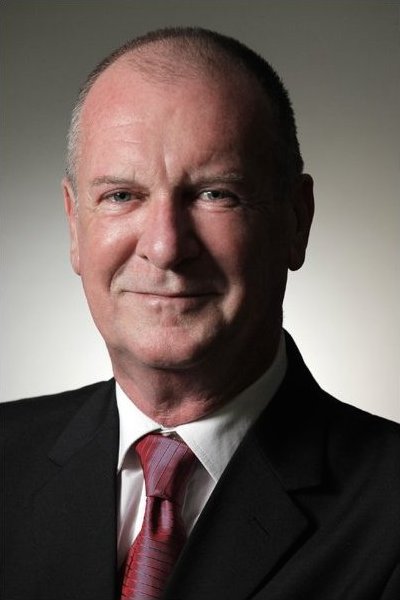
One of Australia’s foremost commentators on faith and sexuality, Anthony Venn-Brown OAM is the author of the best-selling autobiography A Life of Unlearning, which details his journey from being one of the first in the world to experience religious gay conversion therapy, to becoming a married, high-profile preacher in Australia’s growing megachurches (including the precursor to Hillsong), to living as an openly gay man. Founder and CEO of Ambassadors & Bridge Builders International, where he publishes a newsletter, he was awarded the Order of Australia Medal (OAM) for service to the LGBTIQ community.