
From a sermon delivered on June 7, 2026 at Gentle Spirit Christian Church, Atlanta, Ga.
Passing along, Jesus saw a man at his work collecting taxes. His name was Matthew. Jesus said, “Come along with me.” Matthew stood up and followed him.
Later when Jesus was eating supper at Matthew’s house with his close followers, a lot of disreputable characters came and joined them. When the Pharisees saw him keeping this kind of company, they had a fit, and lit into Jesus’ followers. “What kind of example is this from your Teacher, acting cozy with crooks and riffraff?”
Jesus, overhearing, shot back, “Who needs a doctor: the healthy or the sick? Go figure out what this Scripture means: ‘I’m after mercy, not religion.’ I’m here to invite outsiders, not coddle insiders.” (Matthew 9:9-13)
Of purity codes and other velvet ropes
Have you ever stood outside a closed door, listening to the muffled sounds of laughter and clinking glasses, knowing absolutely that you were not on the guest list?
I think many of us know exactly how heavy that closed door can feel. Maybe you were kept out because you didn’t look the part, love the right way, or fit neatly into the polite boxes that society — and also the institutional church — demand. You stood on the other side of the proverbial velvet rope, watching the ones who made the cut have a rollicking good time without you.
But what happens when the door suddenly swings open, the velvet rope swings up? And what if that moment of welcome isn’t at the hands of a bouncer, but is the work of the host themselves? Imagine them walking right past the usual VIPs and A-gays, looking only at you — and right in the eye — and saying, “I saved a place for you. Come and see.”
For most of my ministry, I’ve been asking myself and others exactly who gets to decide who does — and doesn’t — belong in these spaces and places. Why do we so often find ourselves in a society and in cultures where religious purity codes — just like the secular standards that bend toward an artificial normalization of humanity — are far too often weaponized to keep far too much of the true beauty of God’s diverse creation in the margins.
You see, a true sense of welcome doesn’t demand you conceal your full identity at the threshold. Real belonging feels like someone pulling out a chair for you.
As we celebrate Pride Month and honor the divine dignity of our LGBTQ+ siblings, we must confront the closed doors of our own making. We must prepare our hearts for a Savior who bypasses the religious elite and insists, loudly and purposefully, on dining with the misfits.
Matthew the misfit
So, grace and peace to you, my friends. On this second Sunday after Pentecost, in the long, red season of the Church year, there is absolutely nothing ordinary about the Gospel text the lexicon sets before us.
In it we find Jesus walking along, spotting a man named Matthew collecting taxes. In the eyes of the religious establishment, Matthew is a sellout. He is a traitor working for the empire, a man who traded his community for a coin.
Yet Jesus looks at him and simply says, “Come along with me.” Matthew stands up and follows.
What happens next is where the real scandal begins. Jesus goes to Matthew’s house for supper. Eugene Peterson’s The Message translation sets the scene perfectly: “A lot of disreputable characters came and joined them.” (BTW, we should remember who decided these folks were disreputable.)
When the religious gatekeepers see this, they lose their minds. They demand to know why Jesus is acting cozy with crooks and riffraff.
Overhearing their outrage, Jesus fires back with a phrase that should shake the walls of every sanctuary:
Go figure out what this Scripture means: ‘I’m after mercy, not religion.’ I’m here to invite outsiders, not coddle insiders.
A whole table of misfits
Who exactly Jesus was talking to in these moments?
It’s tempting to read these stories and imagine ourselves in them as one of the righteous. But to do that is to miss the point of these passages. It’s to miss hearing the true sound of Jesus’ voice directly addressing the marginalized, the rejected, the people being told they were fundamentally broken by the religious authorities of their day — broken not because they were disabled, just because they weren’t in the “in” crowd.
Sound familiar? Anyone who’s been to a certain type of gay bar can probably relate.
Furthermore, notice that Jesus doesn’t ask Matthew, the despised tax collector, to somehow clean up his act before coming to dinner. For this gathering there is no moral purity test. There is no religious exam to pass.
Jesus offers welcome first. Belonging precedes performance. The gatekeepers of the day couldn’t fathom a God who would sit at a table with people who broke the rules. They wanted a God of boundaries, yet Jesus shows up as a God of a borderless table.
The modern-day excluded ones
As we celebrate LGBTQ+ Pride Month, this passage takes on a burning, urgent relevance. We have to look closely at our own society and culture and ask: Who are the “disreputable characters” and “misfits” that we politely push away today?
For decades, LGBTQ+ Christians have been treated as the ultimate outsiders of mainline church culture. Too often, the religious establishment has slammed the door on us queer and trans individuals, demanding conformity and hiding behind walls of dogma.
We have experienced the heartbreaking onslaught of hate hurled at us by political and religious forces alike. We have been told our love is a sin, our identities are a mistake, and our very existence disqualifies us from the love of God.
But look at the text. Look at what Jesus does. He deliberately draws near to the people pushed aside. He calls them. He breaks bread with them. He honors them.
If Jesus were walking our streets today, his table would be surrounded by drag queens, trans youth, queer elders, and everyone told they don’t belong in the beautiful, sacred or otherwise popular spaces. It would look like a “Drag Me to Church” service!
Jesus always moves toward the margins, because that is where the heart of God beats the loudest.
The meaning of ‘mercy, not religion’
“I’m after mercy, not religion,” Jesus said.
Let those words sink in. How often do we let our traditions get in the way of our compassion?
Religion and other norms, when used as weapons, focus on who is right and acceptable, and who is wrong and outside the norm. It builds fences. Mercy, on the other hand, builds a longer table.
Are we holding onto the comfort of our rules and traditions, or are we practicing radical mercy and welcome?
We live in a society where optics and comfort often take a back seat to true justice and inclusion.
But Jesus demands something deeper from us. He demands that we drop the checklist of who is worthy and instead look at the humanity of the person across from us.
He challenges the status quo of exclusion and calls us to a faith that requires open (and often, dirty) hands and an open heart.
Embodying courageous inclusion
Yes, my friends, each of us is sitting at that dinner table. We are the ones Jesus is speaking to. He is inviting us to dismantle the exclusionary practices of the past and build a future rooted in grace.
To the LGBTQ+ people in our midst: You are deeply loved. You are called, you are honored, and you are essential to the body of Christ. This is a safe space for all, and your presence makes our communities a truer reflection of the divine.
To all of us: The call of Matthew is our call. We are invited to step away from the toll booths of judgment and follow a Christ who prioritizes people over ideas of purity, of worthiness. We must engage in meaningful change, standing in solidarity with those who face the closed door.
Let us be clear: If our churches have no room for queer and trans people, then they have not made room for Jesus. And if our queer spaces have no room for all, then we are doing the same.
This is the Gospel before us, and it will not let us hide behind politeness or delay. We are called to build a church and society where mercy is louder than judgment, where belonging is stronger than fear, and where those pushed to the margins are not merely welcomed but honored.
So let us go into this month ready to tell the truth, break the silence, challenge exclusion wherever it hides, and stand with courage beside those the world and the church have wounded.
This is our witness in Pride Month and in every season after Pentecost: Not religion that protects itself, but mercy that opens the door, sets the table, and refuses to let anyone be called unworthy and outside the love of God.
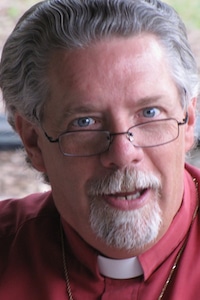
Editor-in-Chief of Whosoever and Founding and Senior Pastor of Gentle Spirit Christian Church of Atlanta, Rev. Paul M. Turner (he/him) grew up in suburban Chicago and was ordained by the Universal Fellowship of Metropolitan Community Churches in 1989. He and his husband Bill have lived in metro Atlanta since 1994, have been in a committed partnership since the early 1980s and have been legally married since 2015.