
It’s well known that June is Pride Month for LGBTQ+ communities worldwide — and parades abound. As we all rev up each year for Pride, so too do the fault lines of race, gender identities, class and more.
This Pride Month also serves as a reminder that the struggle for LGBTQ+ civil rights is far from over, particularly amid the surge of anti-trans legislation across the country. In Massachusetts alone, six anti-trans bills are currently being tracked.
Black LGBTQ+ communities continue to experience Pride differently. As it is still a mainly white-centered event in most cities and towns in America, many POC revelers experience social exclusion, alienation and cultural invisibility. In response, Pride celebrations centering people of color have emerged, creating Black-themed performances, parties, gatherings and getaway weekends rooted in affirmation and belonging.
By 1999, Black Pride events had coalesced into the International Federation of Black Prides, Inc. Recognizing the need to build coalitions beyond their immediate communities, IFBP also established the Black/Brown Coalition to strengthen networks of support and advocacy.
Why Black Pride has its own priorities
Black Pride grooves to a different beat. LGBTQ+ people of African descent use these events not only to celebrate, but also to define and advance their own priorities.
For example, Sunday gospel brunches, Saturday-night poetry slams, Friday-evening fashion shows, bid whist tournaments, house parties, the smells of soul food and Caribbean cuisine, and the beautiful display of African art and clothing are just a few of the cultural markers that make Black Pride distinct from the dominant queer culture.
Health and wellness are also central. At Black Pride events, attendees often encounter health booths offering screenings for sexually transmitted infections, vision care, hypertension and HIV/AIDS. Black Pride also addresses broader social determinants of health affecting the community, including unemployment, housing insecurity, gang violence, youth homelessness, mass incarceration, prostate health, trans health, domestic violence and depression. What too often goes unreported are the proactive, community-led efforts to confront and reduce these challenges.
How Black Pride is evolving
Despite the reputation of Provincetown, Mass., for bohemianism and artistic freedom, the quaint historic fishing village at the very tip of Cape Code — unlike Oak Bluffs on Martha’s Vineyard — did not historically have a Black enclave or a consistent summer influx of African Diaspora vacationers, whether straight or queer. That began to change in the 2000s with the emergence of Black-themed weekends such as Womxn of Color (WoCW) and FROLIC (formerly known as Men of Melanin Magic). Today, during two weekends in June, LGBTQ+ people of the African Diaspora flock to Provincetown to celebrate community, visibility and joy.
For nearly two decades, WoCW’s annual gathering has been a significant cultural anchor — a sacred haven of joy, love, sisterhood and unapologetic self-expression. In this political era that increasingly targets marginalized communities, WoCW stands as a bold and affirming intersectional space. Year after year, it reasserts our right to exist, to gather, and to be seen in our fullness.
Founded in 2007, Womxn of Color Weekend has become a vital cultural force in Provincetown. And since 2017, the visionary power behind its growth and evolution has been architect/artist Jha D Amazi, WoCW’s executive producer and director. Under her leadership, WoCW has transformed into a nonprofit organization with a bold, unapologetic mission: To bring racial and cultural diversity to Provincetown while cultivating spaces rooted in belonging.
“There aren’t enough spaces that center and cater to our experiences as Black, queer, womxn — our expansive gender expressions and our layered identities,” Amazi shared with me. “My hope is that our time together says Black folks, queer folks, women folks don’t just exist here — we thrive here. We belong here.”
Now celebrating its 10th year in Provincetown, the signature summer event known as FROLIC welcomes queer men of color from across the globe. It’s an embrace of brotherhood culture — a supportive, affirming fraternity that fosters connection, belonging and pride for all. And for six days, Frolic offers boat cruises, pool parties, club nights, beach takeovers, panels, workshops, group exercise and so much more.
With more than 1,200 FROLICkers filling Commercial Street — the town’s vibrant main drag — the energy is unmistakable, with laughter, joy and celebration rippling through every corner. Attendees arrive from as nearby as neighboring Truro, Mass., to as far away as Amsterdam.
“At its core, FROLIC is a space rooted in joy, belonging, and intentional community-building for queer people of color,” Ronnie Smith told me. He is the executive producer of FROLIC. This multicultural brotherhood creates a safe, protective camaraderie that sparks lifelong friendships and shared memories.
Why weekends of pure Black joy are necessary
The theme for Pride Month 2026 — resilience, liberation, and visibility — is more than a slogan; it is a call to action and radical self-care. The themed weekends of WoCW and FROLIC are both. They are acts of resistance, to take up space and rebuke erasure in this political clime. They are a bold declaration of our rights as queer people of color to be our authentic selves. On these weekends, we are all fam. It’s the one time each year I gift myself a weekend of unabashed radical self-care. I only wish there were more.
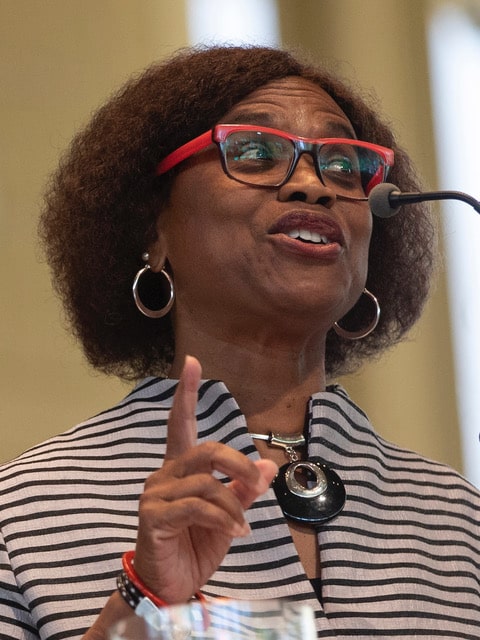
Public theologian, syndicated columnist and radio host Rev. Irene Monroe is a founder and member emeritus of several national LBGTQ+ black and religious organizations and served as the National Religious Coordinator of the African American Roundtable at the Center for LGBTQ and Religion Studies in Religion at Pacific School of Religion. A graduate of Wellesley College and Union Theological Seminary, she served as a pastor in New Jersey before studying for her doctorate as a Ford Fellow at Harvard Divinity School and serving as the head teaching fellow of the Rev. Peter Gomes at Memorial Church. She has taught at Harvard, Andover Newton Theological Seminary, Episcopal Divinity School and the University of New Hampshire. Her papers are at the Schlesinger Library at Radcliffe College’s Research Library on the History of Women in America.