
The Bible belongs to trans kids too
Ten-year-olds don’t listen to a Bible story so much as they move into it. Tell them about the shepherd boy and the giant, and somewhere in the third row a kid’s hand is already testing the weight of the slingshot. Tell them about the lost sheep, and the room gets a little colder and a little darker, because it’s getting dark in the story and someone is calling their name. That’s how children read — from the inside, trying the story on like a coat.
Which means the pictures matter more than we admit. Pull any children’s Bible off the shelf and look at who’s standing in that field, huddled with that flock, wearing that coat. The haircut is current. The gender is unambiguous and matches whatever the culture has decided a boy or a girl is supposed to look like that decade. Far too often, the kid in the illustration is standard-issue — smooth, generic, unremarkable in exactly the ways that let many other children slide right into the story without friction.
This isn’t a hunch. The Cooperative Children’s Book Center at the University of Wisconsin–Madison keeps count. In its tally of the children’s and young adult books it received from publishers in 2024, roughly seven percent included LGBTQ+ characters. Children’s Bibles, produced in one of the most cautious corners of an already cautious industry, are unlikely to be the books pulling that number up.
A child who has spent years being told, gently or otherwise, that he isn’t quite the boy the world expected, or that she doesn’t fit the girl on the cover, runs into a wall the rest of us don’t notice is there. They are not imagining themself as David. They are imagining themself as someone imagining David — someone standing just outside the illustration, waiting for permission they were never quite offered.
The Bible actually centers those on the margins
Here’s the part that took me embarrassingly long to notice, given how many years I’ve spent reading the Bible out loud: The actual text keeps telling us the opposite of what our illustrations do.
Moses insists that he is slow of speech, and God hands him a nation to lead anyway. Joseph is so obviously his father’s favorite that his own brothers throw him in a pit to be rid of him — and he’s the one whose dreams turn out to be true. David isn’t even in the room when Samuel comes to anoint the next king; his father doesn’t call him in from the field until Samuel asks whether all his sons are present. An Ethiopian court official — a eunuch whose status placed him outside the traditional religious boundaries described in Deuteronomy — is reading Isaiah alone in his chariot when Philip approaches him and starts talking — no interview, no waiting period.
None of these biblical figures maps neatly onto the modern category of transgender. That is not the point. The point is that Scripture repeatedly places people whom their families, communities, or religious traditions considered unsuitable at the center of God’s work.
And there’s a detail in that scene I can’t stop turning over: The scroll in the eunuch’s lap is Isaiah — the same prophetic book that promises, just a few chapters later, that God will give eunuchs “a name better than sons and daughters.” Acts does not tell us whether the eunuch had read that promise, but the echo is hard to miss. A man whom religious law had placed at the margins is riding home with a promise of welcome already open on his knees. Scripture has a habit of reaching past the person everyone expected and landing on the one nobody did.
Bible Stories for Transgender Kids
I wrote Bible Stories for Transgender Kids because I got tired of handing children a Bible that works for everyone except the ones who most need it to. Not a different Bible. Not a softened one, with the strange parts filed down so nothing catches. The same stubborn, peculiar book — Moses and his protest that he is slow of speech, Joseph and his coat, the well, the chariot — just told so a transgender kid can actually get inside it, instead of standing at the edge watching someone else be chosen.
Research gives measurable weight to what a name can mean. In a 2018 study, Stephen T. Russell, Amanda M. Pollitt, Gu Li and Arnold H. Grossman examined chosen-name use among transgender young people. Compared with those unable to use their chosen name in any setting, young people able to use it across home, school, work and friendships showed 71 percent fewer indications of severe depression, a 34 percent decrease in reported suicidal thoughts, and a 65 percent decrease in reported suicide attempts.
It took modern researchers a clinical study to establish what Isaiah put in writing a few thousand years ago: A name is not a courtesy. It is closer to a vital sign.
A story cannot reach a child who has never been allowed to enter it. That is why I keep coming back to Philip. He runs alongside the chariot, listens to the eunuch’s question, and — when invited — sits beside him. He does not interrogate the man or demand that he become someone else. He simply opens the story and helps him discover that God’s welcome includes him, too.
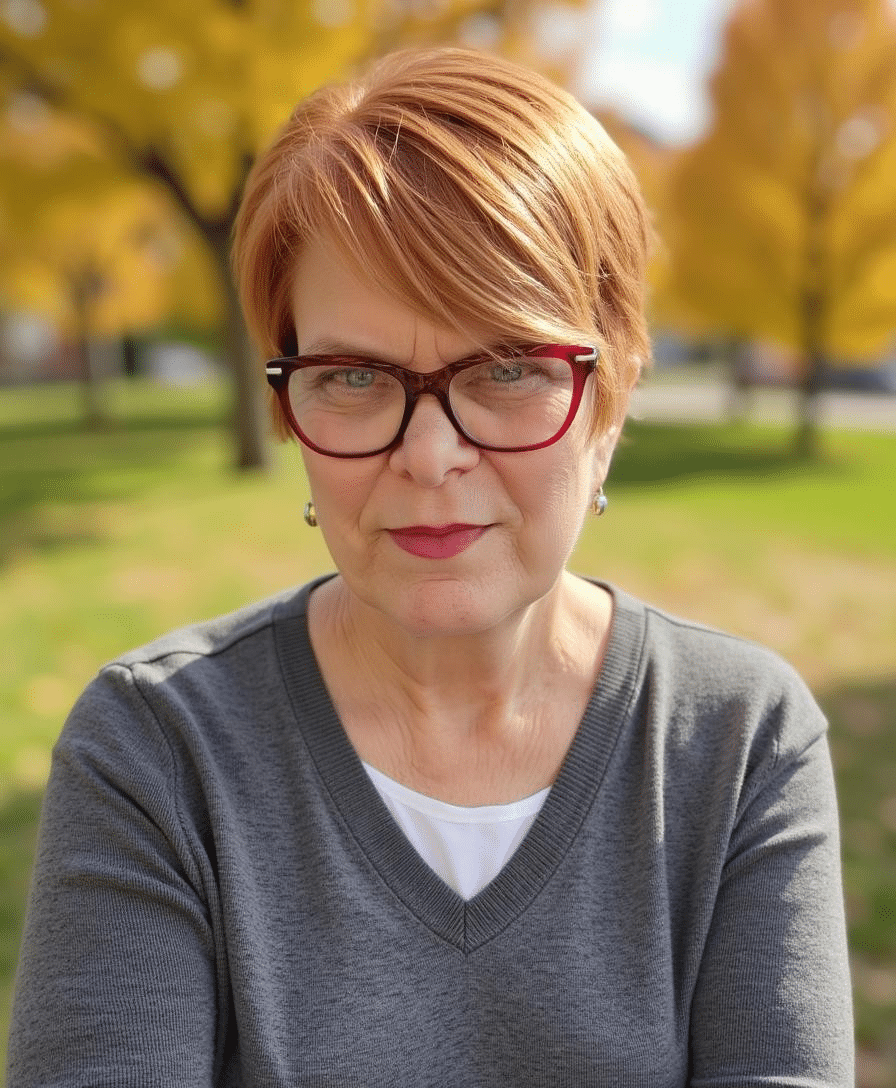
An ordained United Church of Christ minister, Jane Willan is the author of Bible Stories for Transgender Kids, a collection of biblical retellings for children ages seven to 10. She is also author of the Sister Agatha mystery series, the novel Widow’s Walk, and a new cozy mystery series, The Sweet Reads Bookshop. Her Substack, “At the Corner of Faith and Fiction,” covers the meeting place of faith, storytelling, and belonging.